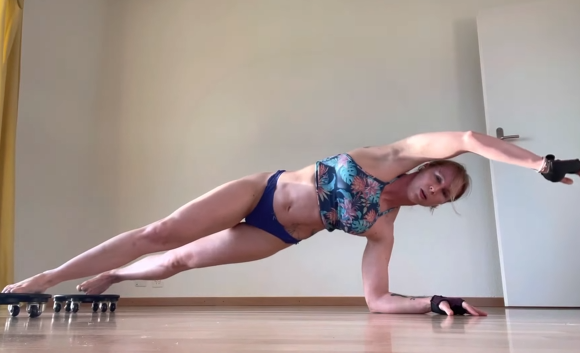
The studio was quiet, filled with a calm energy that seemed to invite focus and intention. A soft breeze drifted in through the open window, carrying the warmth of the morning sun. At the center of it all stood Rhyanna, grounded on her mat, ready to begin a session that would challenge strength, control, and awareness in a way few exercises could. This was not just about learning handstands—it was about building the core foundation that made them possible.
“Welcome to Part 1,” Rhyanna said with a calm smile. “Today, we’re focusing on core rolling training. This is one of the most important steps in preparing your body for safe and controlled handstands.”
She took a moment to breathe deeply, raising her arms overhead before exhaling and folding forward. The movement was slow, intentional, and fluid—setting the tone for what was to come.
Before diving into the rolling exercises, she explained the purpose behind them. Handstands require more than just arm strength. The core acts as the bridge between the upper and lower body, stabilizing the spine and controlling movement. Without proper core engagement, balance becomes unstable, and the risk of injury increases.
“Think of your core as the control center,” she explained. “It helps you move in and out of positions with precision.”
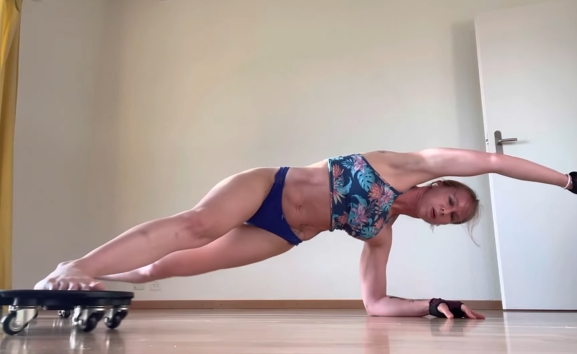
She then demonstrated a simple core roll. Lying on her back, she lifted her legs toward the ceiling and engaged her abdominal muscles. Slowly, she began to roll backward, lifting her hips off the mat and shifting her weight toward her shoulders. The movement was smooth but controlled, requiring deep engagement from her core.
“This isn’t about momentum,” she reminded. “It’s about control. Every inch of movement comes from your muscles—not from swinging or pushing.”
She returned to the starting position and repeated the movement, this time emphasizing alignment. Her spine stayed rounded, her neck relaxed, and her breathing steady. Each repetition built strength, not just in the visible muscles, but deep within the stabilizing core.
The outtake moments began early.
On one attempt, her balance shifted slightly, causing her to roll too far and lose control.
“Okay, that one was a bit enthusiastic,” she laughed, sitting back up. “Let’s dial it in.”
Rather than seeing it as a mistake, she treated it as part of the process. Core rolling is as much about learning what not to do as it is about mastering the movement itself.
Next, she introduced a variation: the tuck roll. From a seated position, she tucked her knees into her chest and gently rolled backward onto her upper back. The key, she explained, was to maintain tight core engagement while keeping the movement smooth.
“Keep your body compact,” she instructed. “Think small and controlled, not fast and loose.”
She demonstrated again, this time holding the tuck position longer before rolling back and returning with control. The movement required coordination and awareness, forcing the body to stay connected and engaged throughout.
As she repeated the exercise, she added a slight pause at the top of the roll.
“This pause is important,” she said. “It teaches your body how to stabilize in inverted positions. That’s exactly what you need for handstands.”
Each pause challenged her strength. Her abdominal muscles activated deeply, her lower back stayed supported, and her breathing remained steady. The combination of strength and control created a sense of balance even while upside down.
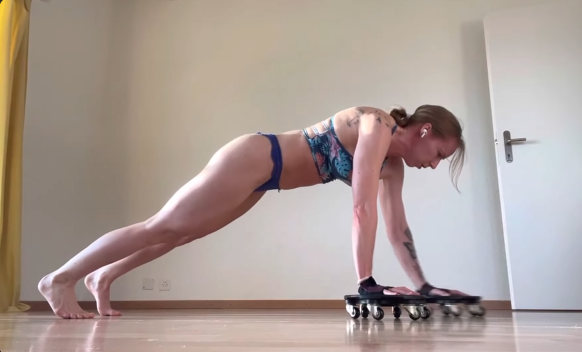
The camera captured small moments of imperfection as well. A slight wobble here, a shift in the shoulders there. Nothing dramatic, but enough to show that even an experienced teacher continues to refine her control.
“Don’t worry if you don’t get this right away,” she reassured. “It’s normal for your body to take time to adapt.”
She then transitioned into a more dynamic version of the core roll. This time, she added a gentle lift of the legs as she rolled, mimicking the action needed to enter a handstand. The goal was to train the core to support the body during transitions.
“Think of this as a preparation drill,” she explained. “We’re teaching your body how to move with intention.”
As she moved through the exercise, her control became even more evident. Each roll was deliberate, each lift precise. Her breathing guided the movement—inhale to prepare, exhale to engage and lift.
At one point, she slightly lost her timing, causing her legs to tilt unevenly.
“Ah, there we go,” she said with a small smile. “That’s why we practice.”
Instead of frustration, there was patience. Instead of perfection, there was progress.
She paused to address the importance of consistency. Core strength is not built in a single session. It develops over time, through repeated practice and mindful effort.
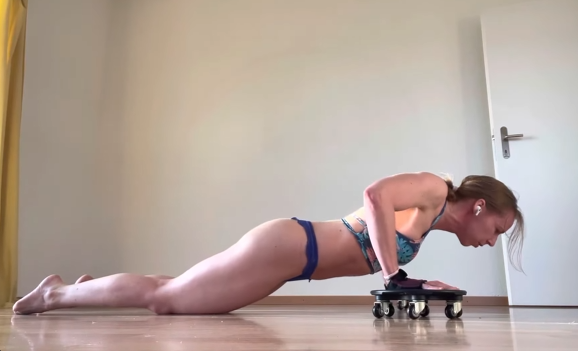
“You don’t have to rush this process,” she said. “In fact, slowing down is what will help you improve faster.”
She encouraged viewers to focus on quality over quantity. A few well-executed repetitions are far more valuable than many rushed ones. The goal is to build awareness—understanding how each muscle contributes to the movement.
As the session continued, she guided the practice into a flow of rolling variations. Each one added a new layer of challenge, from holding the tuck longer to controlling the descent with greater precision.
Through it all, one thing remained constant: the emphasis on control.
“Control is everything,” she repeated. “It’s what keeps you safe. It’s what allows you to progress.”
The final exercise of the session brought everything together. From a lying position, she engaged her core, rolled backward into a controlled lift, and paused at the top before returning slowly to the mat. It was a seamless blend of strength, balance, and coordination.
She completed the movement with ease, then sat up, breathing deeply.
“Beautiful work,” she said softly, almost as if speaking to herself as much as to the audience.
As the session came to a close, she reflected on the journey ahead. This was just Part 1—the beginning of building the foundation for handstands. There would be more to come, more progress to make, and more challenges to face.
But for now, the focus was simple: mastering control, one roll at a time.
“Take your time with this,” she said, offering a final piece of advice. “Your handstand will come. But only if your foundation is strong.”
She smiled, placing a hand on her core.
“This is where it all begins.”