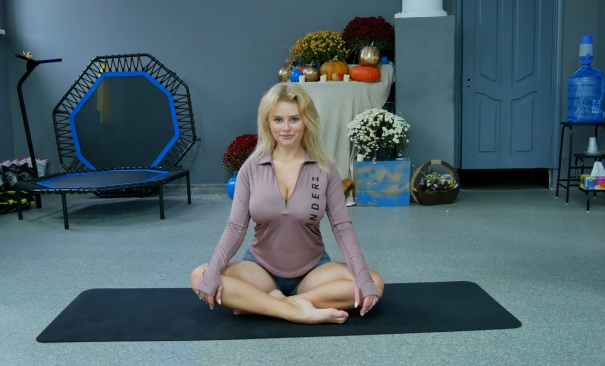
The gym is quiet at first—just the soft echo of footsteps on the mat and the faint hum of the morning air. One by one, students roll out their mats, forming a semicircle around the instructor. There’s no rush, no pressure—just a shared goal: to move better, feel better, and unlock greater leg mobility.
Mobility isn’t just about flexibility. It’s about control.
In gymnastics, that control is everything.
The instructor claps lightly, signaling the start. “Alright everyone, let’s begin with a gentle warm-up. Remember—don’t force anything. We’re here to improve, not to rush.”
The class starts with light movement—marching in place, small leg swings, and controlled hip circles. These simple motions increase blood flow and prepare the joints for deeper work. It might seem basic, but skipping this step is one of the biggest mistakes people make.
Warm muscles move better.
Injuries happen when they don’t.
As the body begins to wake up, the class transitions into dynamic stretches. These are active movements that gently push the range of motion without holding static positions for too long.
One of the first key movements is the Leg Swing. Students stand tall, holding onto a wall or barre for support, and swing one leg forward and backward in a controlled motion. The goal isn’t height—it’s control and smooth movement.
“Keep your core engaged,” the instructor reminds. “No flopping. You’re in charge of the movement.”
This exercise targets the hip flexors and hamstrings, gradually increasing mobility while maintaining stability.
Next comes the Lunge Stretch. Stepping one foot forward into a deep lunge, students lower their hips while keeping their torso upright. The stretch is felt in the hip flexors of the back leg and the glutes of the front leg.
“Breathe into the stretch,” the instructor says. “Don’t hold your breath. Let your body relax into it.”
Mobility improves when tension is released—not when it’s fought.
From there, the class moves into deeper stretches. Mats become essential now as students transition to the floor. One of the most fundamental positions is the Pike Stretch.
Sitting with both legs extended straight in front, students hinge forward at the hips, reaching toward their feet. Some can touch their toes easily, while others are still working toward that goal.
And that’s okay.
There’s no competition here.
“Focus on length, not how far you go,” the instructor encourages. “Keep your back straight and lead with your chest.”
This stretch targets the hamstrings, a key muscle group for leg mobility. Tight hamstrings can limit everything—from splits to jumps to basic movement patterns.
After holding the stretch, the class gently releases and transitions into a wider position—the Straddle Stretch.
Legs spread wide, students lean forward, then to each side, exploring different angles. This movement opens up the inner thighs and hips, areas that are crucial for gymnastics skills like splits and leaps.
“Think about melting into the floor,” the instructor says softly. “No bouncing. Just steady breathing.”
As the class progresses, the intensity increases slightly.
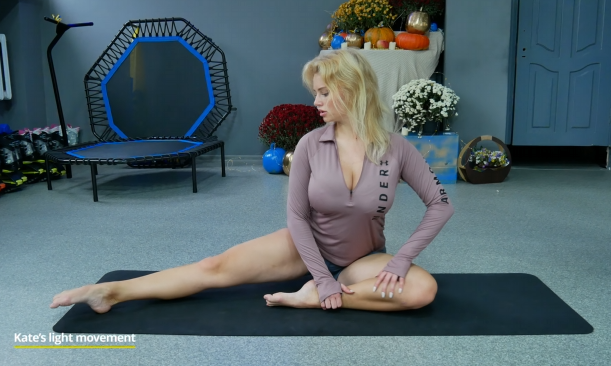
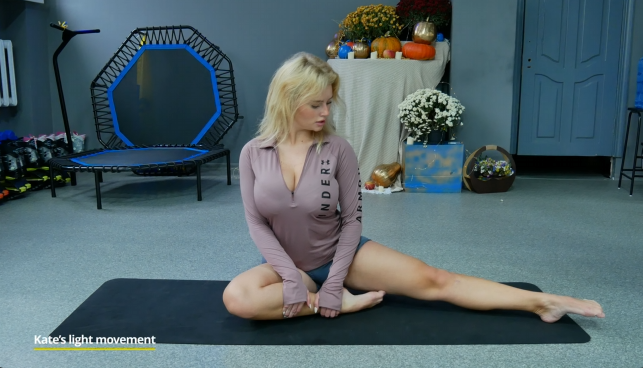
Now comes one of the most recognizable mobility goals in gymnastics—the Front Split.
Students position one leg forward and one leg back, slowly lowering their hips toward the ground. Some use yoga blocks for support, while others are closer to the floor.
“Square your hips,” the instructor reminds. “This isn’t just about going low—it’s about proper alignment.”
That’s the key difference between flexibility and mobility.
Flexibility is range.
Mobility is controlled range.
Without control, flexibility has limited value.
After holding the front split, the class carefully comes out of the position. The instructor emphasizes moving slowly—no sudden movements that could strain the muscles.
Then, they switch sides.
Balance matters.
Mobility should be even across both legs to prevent imbalances and reduce the risk of injury.
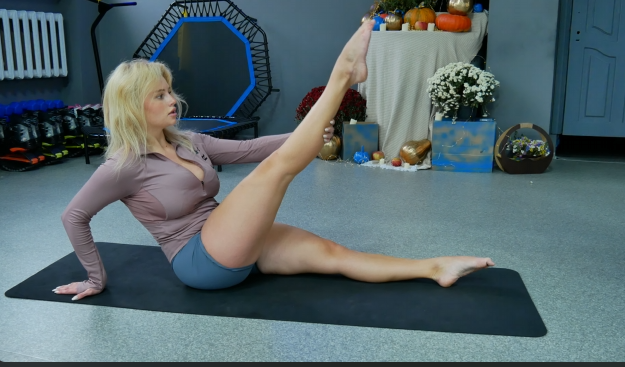
Next, the class moves into active flexibility work. This is where strength meets mobility. One important exercise here is controlled leg lifts, similar to the motion used in gymnastics kicks.
Students lie on their backs and lift one leg at a time, keeping it straight and controlled. This strengthens the hip flexors while reinforcing the range gained from stretching.
“It’s not about how high you lift,” the instructor says. “It’s about how controlled you are.”
The room is filled with focused silence. Each student is fully engaged, listening to their body, adjusting their position, finding their edge—but not pushing beyond it.
That’s where real progress happens.
As the session nears its end, the intensity decreases again. The class returns to gentle stretches, allowing the muscles to relax and recover.
Breathing slows.
Movements soften.
The final stretch is a relaxed seated position, eyes closed, hands resting on the knees.
“Take a moment,” the instructor says quietly. “Notice how your body feels now compared to when you started.”
There’s a difference.
More openness.
More ease.
More control.
That’s the result of consistent mobility work.
It’s not about achieving perfect splits in one day or forcing your body into extreme positions. It’s about gradual improvement, building strength within your range, and respecting your body’s limits.
For beginners, progress might be slow.
For experienced athletes, there’s always room to refine.
Mobility is a lifelong practice.
As the class ends, students roll up their mats, some chatting quietly, others reflecting on their session. There’s a shared sense of accomplishment—not from pushing to exhaustion, but from moving with intention.
Because in gymnastics—and in life—how you move matters.
And leg mobility is the foundation of that movement.
With consistent practice, patience, and proper technique, anyone can improve. One stretch at a time. One breath at a time.
And every session brings you closer to stronger, more controlled, and more confident movement.