There is a level of movement that most people never get to see up close.
Not because it is hidden.
But because it requires years—often decades—of patient, disciplined training.
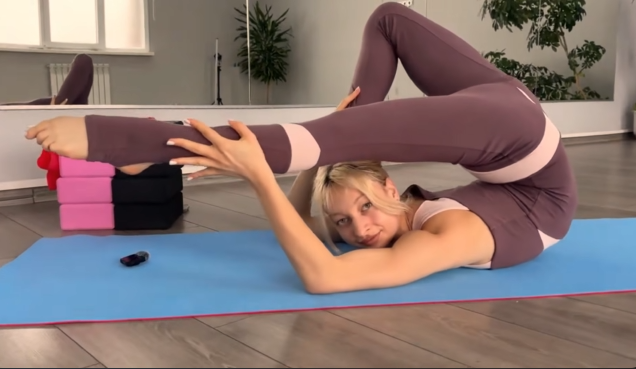
This is the world of extreme contortion training, where the human body is slowly and carefully conditioned to move beyond what most consider “normal” flexibility. It is a practice often associated with circus performers, professional acrobats, and elite movement artists who dedicate their lives to mastering control, balance, and deep body awareness.
Despite how it may look from the outside, this is not about instant results.
It is not about forcing the body into impossible shapes.
It is about control.
Progression.
And respect for the limits of the human body at every stage.
An authentic circus flexibility routine begins long before any extreme position is attempted. It starts with breath, alignment, and preparation. The body must be warm, the joints awake, and the mind focused.
Without this foundation, no advanced movement is safe or sustainable.
The training usually begins with simple mobility work.
Slow neck rotations.
Gentle shoulder rolls.
Controlled spinal waves.
These movements may look basic, but they serve a critical purpose—they awaken the nervous system and prepare the connective tissues for deeper work.
In contortion training, nothing is rushed.
Every millimeter matters.
Every sensation is observed.
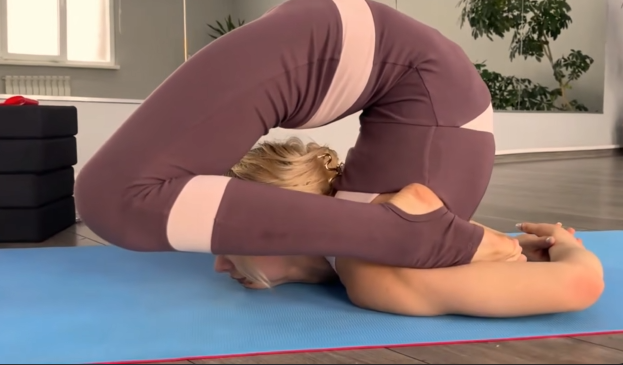
As the body begins to warm, practitioners move into deeper stretches. Forward folds, backbends, and hip openers are introduced gradually. The goal is not to reach the deepest shape immediately, but to explore the edges of flexibility with awareness.
One of the most important principles in this practice is active flexibility.
Unlike passive stretching, where gravity does most of the work, active flexibility requires the muscles to engage while in a stretched position. This builds strength within flexibility, which is essential for preventing injury in extreme ranges of motion.
For example, in a seated forward fold, the practitioner doesn’t simply collapse toward the legs. Instead, they engage the quadriceps, lengthen the spine, and control the descent with precision.
It is strength and softness at the same time.
This balance defines authentic circus training.
As the session progresses, deeper backbends may be introduced. These are carefully controlled movements that open the chest, shoulders, and spine. The practitioner moves slowly into a bridge or wheel variation, focusing on even distribution of weight and steady breathing.
In this phase, breath becomes a guiding force.
Inhale to expand.
Exhale to deepen awareness.
Nothing is forced beyond what the body can safely express.
One of the key elements in extreme flexibility training is proprioception—the awareness of where the body is in space. Without this, advanced contortion poses would be unsafe.
Practitioners constantly check alignment.
They adjust hand placement.
They refine the angle of the hips, shoulders, and spine.
Even in deep positions, there is continuous micro-adjustment.
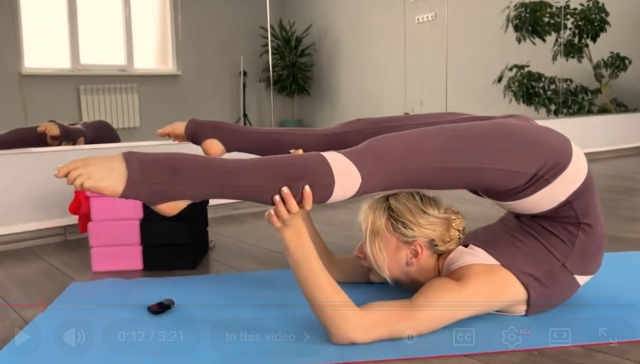
This is what separates performance from practice.
As strength and flexibility develop over time, more advanced shapes become accessible. These may include chest stands, deep splits, needle scales, and extreme backbends that require both spinal mobility and core stability.
But even at this level, control remains the priority.
A pose is never simply “achieved.”
It is entered slowly, held consciously, and exited with equal care.
There is also a strong emphasis on symmetry and balance in training. The body is never pushed on only one side. Every stretch is mirrored. Every progression is balanced between left and right to maintain structural integrity.
Without this balance, long-term training would lead to injury and dysfunction.
Recovery is another essential part of the routine.
After deep flexibility work, the body must be brought back to a neutral state. Gentle counter-stretches are used to reset the spine and joints. Light movement helps restore circulation and reduce tension.
Rest is not optional in contortion training.
It is part of the discipline.
Mentally, this practice demands focus and patience.
Progress is often slow—sometimes so slow that it is almost invisible day to day. But over months and years, the transformation becomes profound. The body begins to open in ways that once seemed impossible.
Not through force.
But through consistency.
Through awareness.
Through trust.
There is also a strong artistic component to this training, especially within circus environments. Movement is not only functional—it is expressive. Every pose can become part of a performance, telling a story through shape, line, and flow.
This is where yoga and contortion often overlap.
Both practices value breath, control, and presence.
Both require deep connection between mind and body.
And both teach that true flexibility is not just physical—it is also mental and emotional.
Fear is often one of the biggest barriers in extreme flexibility training. The body has natural protective limits, especially in the spine and joints. Learning to distinguish between safe discomfort and harmful pain is a skill that takes time to develop.
Experienced practitioners learn to listen closely.
They understand when to push slightly forward.
And when to step back.
This awareness is what keeps the practice sustainable over years of training.
A typical advanced routine might flow like this:
Warm-up mobility work.
Controlled active stretching.
Deep hip and shoulder opening.
Backbend progressions.
Balance and inversion drills.
Slow cooldown and restoration.
Each section builds upon the previous one, creating a complete system that develops strength, flexibility, and control simultaneously.
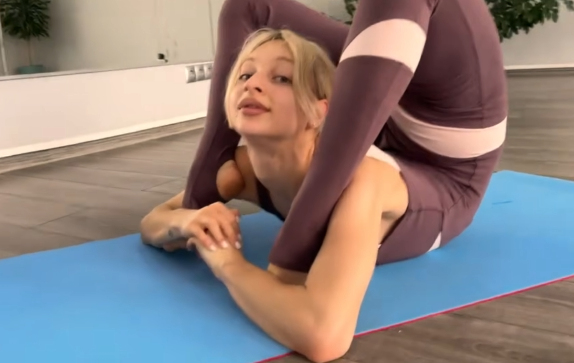
Even though the final shapes may appear extreme, the process is always grounded in safety and technique.
There are no shortcuts.
Only repetition.
Only patience.
Only dedication.
And while the final poses often attract attention for their visual intensity, the real beauty of contortion training lies in what cannot be seen.
The discipline.
The awareness.
The countless hours of unseen preparation.
Because behind every extreme shape is a foundation built slowly, carefully, and respectfully.
At its core, authentic circus flexibility training is not about becoming “incredible” or “superhuman.”
It is about understanding the human body more deeply than most ever will.
It is about exploring potential.
Expanding control.
And discovering what happens when movement becomes both art and science at the same time.
In the end, the practice is not defined by how far the body can bend.
But by how well it is understood.
And how safely it is guided through every stage of its journey.