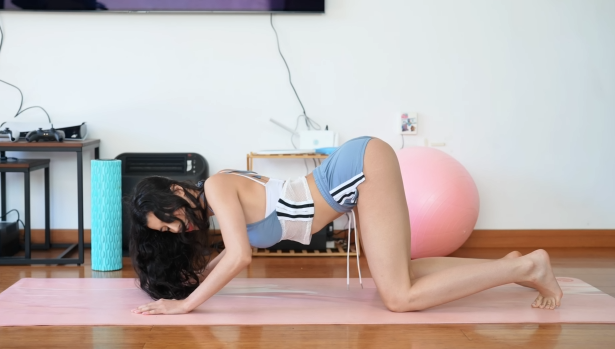
The room was quiet except for the soft rhythm of breath and the subtle rolling sound of foam against a yoga mat. Early morning light filtered through the windows, casting long shadows across the floor. For many, stretching was something done quickly—an afterthought before or after a workout. But here, it was the main focus.
Flexibility wasn’t just about bending further.
It was about understanding the body.
And one of the most powerful tools for that journey was the Foam Roller.
At first glance, it looked simple—a cylindrical piece of dense foam. But in practice, it became a bridge between tension and release, between stiffness and freedom of movement.
The session began slowly.
Before attempting deep stretches like splits or advanced yoga poses, the body needed preparation. Tight muscles resist change. They protect themselves. And without proper release, forcing flexibility could lead to strain or injury.
That’s where foam rolling came in.
The first focus was the legs.
Participants positioned the foam roller under their hamstrings, lifting their hips slightly as they began to roll back and forth. The movement was controlled—not rushed, not aggressive.
“Pause on the tight spots,” the instructor guided.
When a tender area was found, they held pressure there, breathing deeply. It wasn’t always comfortable. In fact, it often wasn’t.
But that discomfort told a story.
Muscles holding tension.
Fascia tightening over time.
Stress stored in the body.
With each breath, the tension began to soften.
From there, they transitioned to the quadriceps—rolling slowly from the hips down toward the knees. Some participants winced slightly as they encountered tighter areas, but they stayed with it.
Consistency mattered more than intensity.
Next came the calves, a commonly overlooked area that plays a major role in overall flexibility. As they rolled, they pointed and flexed their feet, increasing the effectiveness of the movement.
The body was waking up.
Blood flow increased.
Muscles began to feel warmer, more responsive.
And only then did the deeper stretching begin.
They moved into a gentle forward fold, allowing the hamstrings to lengthen naturally. Unlike cold stretching, this felt different—more open, less resistant.
“Don’t force it,” the instructor reminded. “Let the body respond.”
From there, the practice progressed toward more advanced flexibility work.
For those aiming to improve their Front Splits, foam rolling had already made a noticeable difference. The hips felt less restricted, the hamstrings more willing to extend.
They eased into the position gradually—one leg forward, the other extending back.
Some reached deeper than usual.
Others stayed higher, focusing on alignment and breath.
Both were equally valid.
Flexibility is not a competition.
It’s a process.
The session then shifted toward Yoga-inspired flows, integrating mobility with strength. Movements like lunges, hip openers, and gentle backbends helped reinforce the new range of motion created by foam rolling.
The combination was powerful.
Release, then stretch.
Relax, then engage.
For more advanced participants, elements of Contortion were introduced. These movements required not only flexibility but also control and awareness.
Backbends deepened.
Shoulders opened further.
Spinal mobility increased.
But even at this level, the principles remained the same.
No forcing.
No rushing.
Only listening.
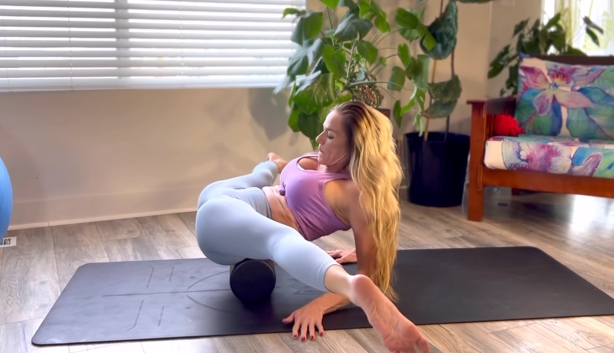
One participant, Dara, had struggled with tight hip flexors for years. Despite consistent stretching, progress had been slow.
But after focused foam rolling, something shifted.
As he moved into a deeper lunge, he noticed less resistance.
Less tension.
More space.
It wasn’t dramatic.
But it was real.
And sometimes, that’s all it takes—a small breakthrough to change everything.
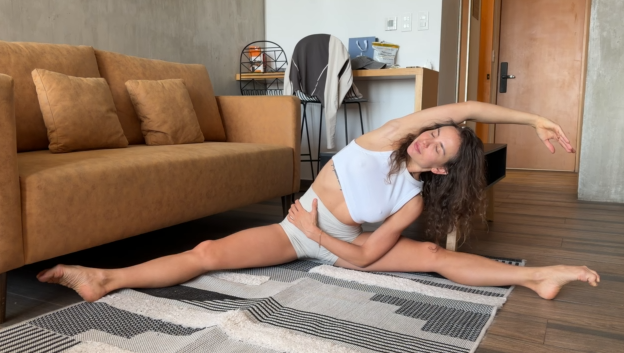
Across the room, Lina worked on her middle splits. This had always been challenging for her. The inner thighs held a lot of tension, making it difficult to go deeper.
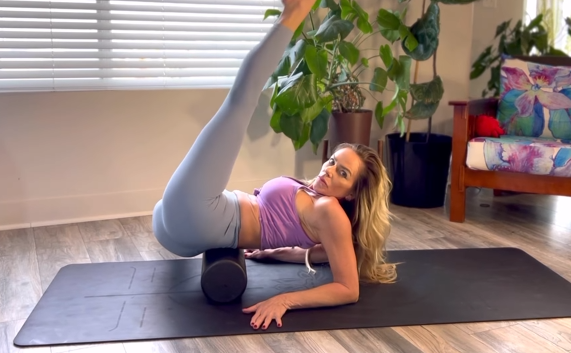
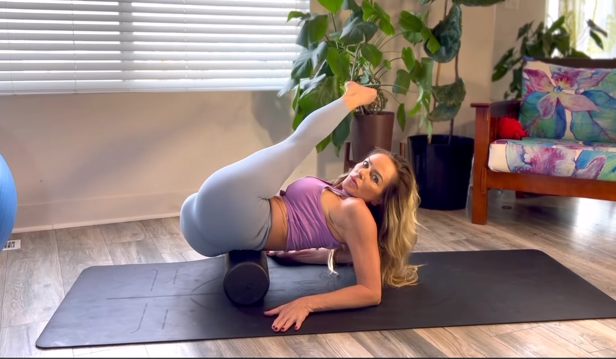
With the foam roller placed under her inner thigh, she applied gentle pressure, rolling slowly.
It was uncomfortable.
But she stayed with it.
Breathing.
Releasing.
And when she returned to her stretch, something felt different.
Not easy.
But possible.
Her body wasn’t fighting her as much.
That was progress.
As the session continued, foam rolling was reintroduced between stretches. This alternating approach helped maintain muscle relaxation while gradually increasing flexibility.
It wasn’t about pushing harder.
It was about working smarter.
The final phase focused on integration.
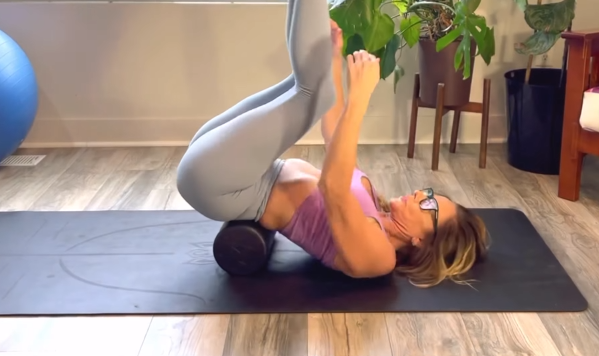
Participants moved through slow, controlled sequences that combined flexibility, strength, and balance. This ensured that the new range of motion wasn’t just temporary—it became usable.
Because flexibility without control is unstable.
And control without flexibility is limited.
The goal was both.
Finally, they transitioned into stillness.
Lying on their backs, bodies relaxed, breath steady.
The foam rollers rested beside them, no longer tools of pressure, but symbols of progress.
“Notice how your body feels,” the instructor said softly.
There was a difference.
Subtle, but undeniable.
Muscles felt longer.
Joints felt freer.
Movement felt easier.
Not because they had forced anything—but because they had worked with their bodies, not against them.
Foam rolling had done more than just prepare the muscles.
It had changed the relationship between effort and ease.
As the session came to an end, participants sat up slowly, taking a moment to absorb the experience.
Flexibility isn’t built in a day.
It’s built through patience, consistency, and awareness.
And tools like the Foam Roller make that journey more effective—not by forcing the body to change, but by helping it let go of what holds it back.
Because sometimes, the key to going deeper…
Is learning how to release first.