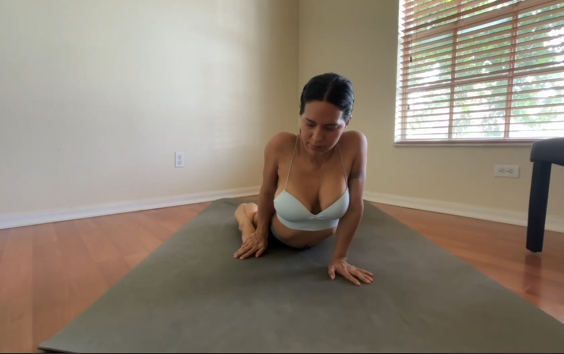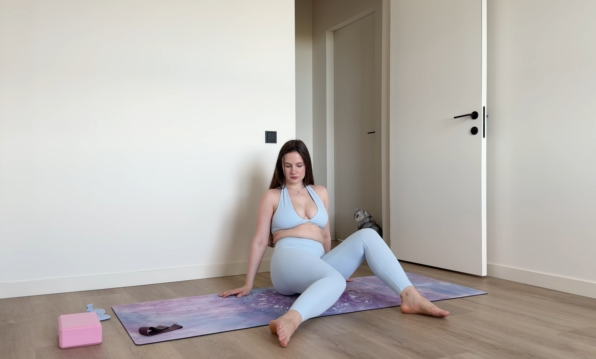
In a quiet studio filled with soft light and calm energy, the focus wasn’t on speed or intensity. It wasn’t about pushing the body to its limits. Instead, the attention was on something deeper—control, alignment, and awareness.
This was a practice centered on the core.
And not just any core workout—this was a mindful approach combining stability, posture, and controlled movement through a guided flow inspired by yoga principles and supported by a Foam Roller.
The foam roller sat beside each mat, simple in appearance but powerful in purpose.
The session began with grounding.
Participants sat upright, legs extended, hands resting lightly on their knees. The spine lengthened, shoulders relaxed, and breath slowed into a steady rhythm.
“Your posture is your foundation,” the instructor said calmly.
From that foundation, everything would build.
The first movement was subtle.
Participants placed the foam roller behind their backs while lying down, creating gentle support along the spine. This helped encourage proper alignment and opened the chest, counteracting the rounded posture many carry from daily life.
With the roller supporting the upper back, they began small movements—arms reaching overhead, then returning to the sides. The goal wasn’t to move fast, but to engage the core through awareness.
Because core strength is not just about the visible muscles.
It’s about stability.
Control.
And balance.
Next came the activation phase.
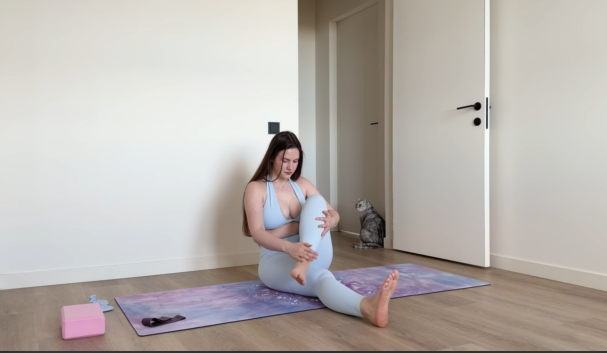
With the foam roller still involved, participants lifted one knee at a time toward the chest, initiating what is known as a roller knee lift flow. This movement required coordination between the lower abs, hip flexors, and stabilizing muscles.
At first, the motion was small.
Controlled.
Intentional.
One knee lifted.
Then lowered.
Then the other.
Each movement demanded focus.
The core engaged to stabilize the pelvis, preventing unnecessary rocking or shifting.
“Move slowly,” the instructor reminded. “Control is strength.”
This simple movement quickly became more challenging than expected.
Because when done correctly, even small movements require deep muscular engagement.
From there, the flow progressed.
Both knees lifted together toward the chest, then extended outward slightly before returning.
This variation increased the demand on the abdominal muscles, requiring even greater control to maintain balance and prevent the lower back from arching excessively.
Participants were encouraged to breathe deeply throughout.
Inhale to prepare.
Exhale to lift.
Inhale to lower.
Breath became the rhythm that guided the movement.
One participant, Lina, noticed something important.
When she rushed the movement, her lower back began to strain.
But when she slowed down—when she focused on her breath—the movement became smoother.
More controlled.
And more effective.
This is the essence of core training.
Not speed.
Not repetition.
But precision.
As the session continued, the flow evolved.
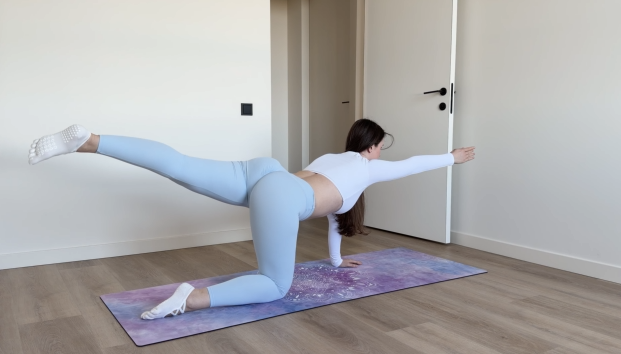
Participants transitioned into a tabletop position—hands and knees on the mat, with the foam roller placed under one foot at a time.
From this position, they extended one leg backward while maintaining balance and core engagement.
This required stability not just in the abs, but also in the shoulders and hips.
The entire body worked together.
Because the core doesn’t function in isolation.
It supports everything.
The next phase introduced a more dynamic Yoga flow.
From a low plank position, participants performed controlled knee tucks—drawing one knee at a time toward the chest while maintaining a stable upper body.
The movement resembled a slow, deliberate mountain climb.
Up.
Hold.
Down.
Switch.
Again, the emphasis was on control.
No swinging.
No momentum.
Just strength and stability.
This kind of movement is particularly effective for building deep core strength because it forces the body to stabilize under motion.
And stability is the foundation of good posture.
As the flow progressed, participants integrated more complex movements.
Some transitioned into a Plank Exercise, holding their bodies in a straight line from head to heels while maintaining steady breath.
From there, they added knee lifts—bringing one knee toward the chest and returning it to the plank position without shifting the hips.
This required intense core engagement.
The challenge wasn’t just holding the position.
It was maintaining alignment while moving.
Across the room, the atmosphere remained focused yet calm.
No one rushed.
No one compared.
Each person worked at their own pace.
Because the goal wasn’t perfection.
It was progress.
One small improvement at a time.
After the more intense sequences, the session shifted into a recovery phase.
Participants returned to the foam roller, placing it under their upper back once again.
This time, the focus was on opening and releasing.
Gentle backbends.
Supported stretches.
Slow breathing.
The contrast between activation and release was intentional.
It allowed the muscles to recover while reinforcing alignment.
Because strength isn’t just built through effort.
It’s also built through recovery.
As the session neared its end, participants moved into a final core engagement sequence.
Lying on their backs, they performed a series of slow, controlled leg lifts.
Both legs extended upward.
Then lowered.
Then lifted again.
Each repetition required deep abdominal engagement.
The lower back stayed grounded.
The movement remained smooth.
And the breath remained steady.
This final flow brought everything together.
Strength.
Stability.
Control.
And awareness.
Finally, they came to stillness.
Lying flat on their backs, arms resting by their sides, eyes closed.
The body felt different.
Not exhausted.
But activated.
Aligned.
Aware.
“Notice your posture,” the instructor said softly.
Even in stillness, the effects were clear.
The spine felt supported.
The core felt engaged.
The body felt balanced.
Yoga for core and posture is not about doing hundreds of repetitions.
It’s about quality.
It’s about mindful movement.
And it’s about building strength from the inside out.
The roller knee lift flow, combined with core-focused yoga and stability training, offers a powerful way to improve both ab strength and overall posture.
Because when the core is strong…
The entire body moves better.
And when the body moves better…
Everything feels a little more aligned.