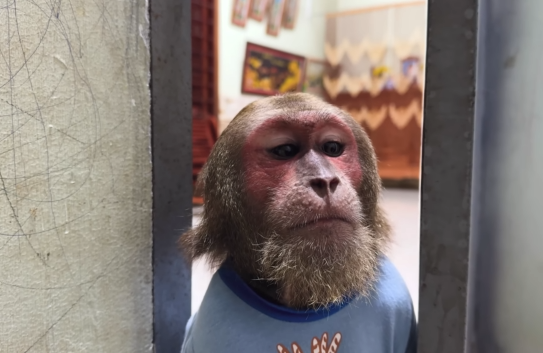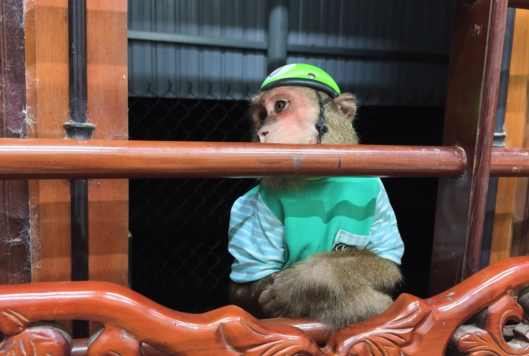
Across the vast tapestry of life on Earth, one can observe intelligence, awareness, and even emotional depth in many forms of animals. From the way a mother cares for her young to the problem-solving abilities of certain species, the natural world offers countless examples of remarkable instinct and behavior. These observations often inspire reflection about life, creation, and the deeper meaning behind existence itself.
Many people who believe in God see the complexity of nature as a reflection of divine design. They look at the intricate systems within the body of a small creature or the instinctive migration of birds across continents and find signs of purpose. For them, creation itself becomes a form of communication—a way through which the presence of a higher power can be understood.
Animals demonstrate a range of behaviors that resemble intelligence. For instance, some animals can remember locations, recognize patterns, and even solve simple problems. Others display emotional responses such as fear, affection, grief, or playfulness. A dog greeting its owner with excitement after a long absence, or an elephant mourning the loss of a companion, are often cited as examples of emotional awareness within the animal kingdom.
These qualities show that intelligence and emotion are not exclusive to humans. They exist in varying degrees throughout the natural world. However, there is a distinction between instinct-driven behavior and reflective, conscious reasoning. Humans possess the ability to contemplate abstract ideas such as morality, purpose, and spirituality. This capacity allows for beliefs, doubts, and interpretations about existence itself.
In religious thought, especially within traditions that emphasize creation, these observations are often seen as evidence of a greater intelligence behind the universe. The order found in nature, from the structure of a single cell to the motion of galaxies, is viewed as pointing toward a purposeful design. Many believers argue that such complexity is unlikely to arise purely by chance.
At the same time, there are individuals who do not hold belief in a divine creator. These people may identify as atheists or non-believers, and they often approach the world through scientific reasoning and empirical evidence. From this perspective, the universe is understood through natural laws and processes, without the need to invoke a higher power.
This difference in perspective does not necessarily reflect a lack of intellect or awareness. Rather, it represents a different way of interpreting the same reality. Where one person sees creation as evidence of God, another may see it as the result of natural evolution and physical laws. Both perspectives attempt to explain the same observations, but through different frameworks of understanding.
The question of recognizing God through creation is deeply philosophical and often personal. It involves not only observation but also interpretation, belief, and experience. For some, the beauty of a sunset or the complexity of life forms becomes a moment of spiritual realization. For others, these same phenomena are appreciated as part of the natural world, without requiring a spiritual explanation.
Animals, on the other hand, do not engage in such philosophical inquiry. Their behaviors are guided by instinct, environment, and learned experience. While they may exhibit intelligence in practical ways, they do not reflect on existence, question creation, or develop belief systems. This distinguishes human thought from animal behavior.
When people discuss intellect and belief, it is important to approach the topic with respect and understanding. Labeling or dismissing others based on their beliefs can create division rather than dialogue. The diversity of perspectives—whether religious or non-religious—contributes to a broader conversation about existence, purpose, and the nature of reality.
Ultimately, the observation that animals possess emotions and intelligence can inspire awe at the complexity of life. It can also lead to deeper reflection about where these qualities come from and what they signify. Whether one attributes them to natural processes or to divine creation, they remain an essential part of the human experience of understanding the world.
In conclusion, animals indeed display remarkable intelligence and emotional capacity, which continues to fascinate scientists and observers alike. At the same time, human beings interpret these observations in different ways—some seeing them as evidence of a higher power, and others as outcomes of natural evolution. These differing perspectives reflect the richness of human thought and the ongoing search for meaning in the universe.