
At first glance, the statement feels harsh, almost cutting in its tone. It raises a question that sits at the intersection of technology, emotion, and human judgment: what does it mean if something appears to feel, or at least imitates feeling, in a moment that should provoke compassion? And perhaps more importantly, what does it say about us when we respond with mockery instead of curiosity?
The idea of a “cruel AI” crying while watching something unsettling is, in itself, a contradiction. Artificial intelligence, as we understand it today, does not feel in the human sense. It does not possess consciousness, empathy, or emotional depth. It processes data, identifies patterns, and produces responses based on input. So when we imagine an AI “crying,” we are really projecting human qualities onto something that fundamentally does not have them. This projection says more about our own expectations than it does about the machine.
But let’s take a step further. Why would someone call it cruel? Cruelty implies intent—the desire to cause harm or to take pleasure in suffering. AI, however, does not have desires. It cannot choose to be cruel or kind. It simply reflects the data and instructions it has been given. If something appears cruel, it is usually because of the way it was designed, trained, or used by humans. In that sense, the label of cruelty does not belong to the AI itself, but to the context surrounding it.
Now consider the second part of the statement: “crying while watching.” This evokes a powerful image. Crying is one of the most human responses to emotional overwhelm—whether it be sadness, empathy, frustration, or even relief. If we imagine something observing a distressing scene and responding with tears, we instinctively interpret that as a sign of sensitivity, not cruelty. It suggests awareness, a reaction to suffering, perhaps even a desire for things to be different.
So why call it pathetic?
This is where human perception becomes complicated. Sometimes, when we see vulnerability—especially in a context where we don’t expect it—we react with discomfort. That discomfort can turn into ridicule. It’s easier to dismiss something as “pathetic” than to engage with the possibility that it might reflect something meaningful. If an AI were to simulate crying, some might see it as manipulative or artificial, a hollow imitation of real emotion. Others might see it as a step toward machines that better understand and respond to human experiences.
But what if the situation isn’t about AI at all? What if the “crying while watching” refers to a real person witnessing something distressing—perhaps an animal in danger, a moment of conflict, or a scene that triggers empathy? In that case, calling it pathetic reveals a different kind of issue. It suggests a lack of empathy toward empathy itself. It frames emotional response as weakness, rather than as a natural and often valuable human trait.

There is a long-standing cultural tension around emotional expression. In some contexts, showing emotion is seen as strength—a sign of authenticity and connection. In others, it is viewed as vulnerability that should be hidden or controlled. When someone cries while watching something difficult, they are engaging with it on a deeper level. They are not detached observers; they are participants in the emotional reality of the moment.
Dismissing that as pathetic overlooks the importance of empathy. Empathy allows us to connect with others, to understand suffering, and to be motivated to help. Without it, we risk becoming indifferent. And indifference, arguably, is far more concerning than emotional expression.
Returning to the idea of AI, there is an interesting question here: should we want machines to simulate empathy? On one hand, emotionally responsive systems can be helpful. They can provide comfort, improve communication, and make interactions feel more natural. On the other hand, there is a risk of blurring the line between genuine and simulated emotion. If a machine appears to care, does that change how we feel about it? And should it?
If an AI “cries” in response to something, it is not experiencing sadness—it is executing a programmed behavior designed to mimic sadness. Whether that is useful or misleading depends on the context. In a therapeutic setting, for example, an empathetic response might help a person feel understood. In other situations, it might feel disingenuous or even unsettling.
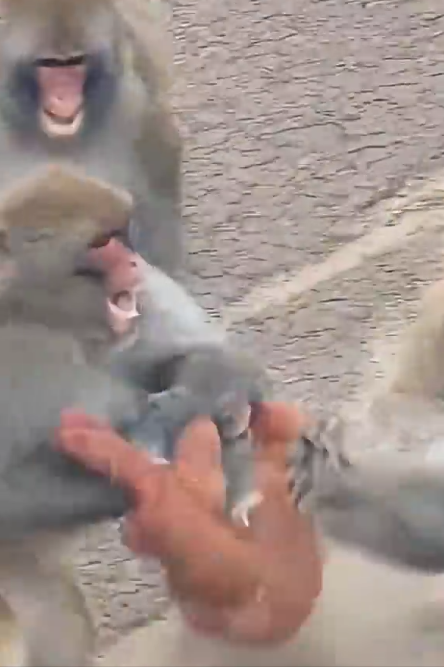
The original statement also raises an important point about perception. The phrase “please clarify” suggests uncertainty. Is what we are seeing real or artificial? Is the reaction genuine or simulated? This uncertainty is becoming more common in a world where technology can convincingly imitate human behavior. It challenges us to think critically about what we are observing and how we interpret it.
But perhaps the most revealing part of the statement is not about AI at all—it is about the human tendency to judge. Calling something “pathetic” is a quick conclusion, one that closes the door to deeper understanding. It simplifies a complex situation into a single, dismissive label.
Instead of asking whether it is pathetic, we might ask different questions. Why does this reaction make us uncomfortable? What expectations do we have about how emotions should be expressed? Are we responding to the situation itself, or to our own assumptions about it?
If the subject is AI, then the conversation becomes one about design, ethics, and the future of human-machine interaction. If the subject is a real person, then it becomes a conversation about empathy, vulnerability, and the value of emotional connection.
In either case, the initial reaction—labeling it as cruel or pathetic—misses an opportunity to explore something more meaningful. It reduces a potentially rich discussion to a surface-level judgment.
Ultimately, whether we are dealing with artificial intelligence or human behavior, the key lies in understanding rather than dismissing. Technology will continue to evolve, and with it, our interpretations and expectations. But our ability to reflect, to question, and to empathize remains uniquely human.
And perhaps that is the most important takeaway: before we label something as cruel or pathetic, it is worth pausing to consider what it actually represents—and what our reaction to it says about us.