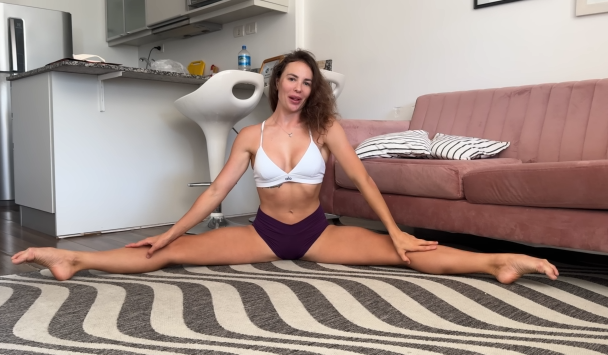
In today’s fast-paced world, lower back pain has quietly become one of the most common physical complaints. Whether you spend long hours sitting at a desk, standing all day, or even working out intensely, the lower back often takes the strain. Tight muscles, poor posture, and lack of mobility all contribute to stiffness and discomfort that can build up over time.
That’s where a simple, effective lower back stretching routine at home can make a powerful difference—and this is exactly where Chebyjane’s approach stands out. Her routine isn’t about pushing your body to extremes. It’s about consistency, control, and listening to your body while gently restoring flexibility and strength.
The beauty of this routine is that it requires no equipment, no gym membership, and no complicated setup. Just a small space, a comfortable surface, and your willingness to move.
To begin, it’s important to create a calm environment. Choose a quiet space where you can focus without distractions. A yoga mat or soft carpet works best to support your spine and joints. Wear comfortable clothing that allows free movement, and take a moment to center yourself. Before starting, take a few deep breaths—in through your nose, out through your mouth—allowing your body to relax.
The first movement in this routine is gentle spinal awareness. Lie flat on your back with your knees bent and feet planted firmly on the ground. Your arms should rest comfortably at your sides. From here, slowly tilt your pelvis upward, pressing your lower back lightly into the floor. Hold for a few seconds, then release. This subtle movement may seem simple, but it helps activate the muscles around your lower spine and prepares your body for deeper stretches.
Next, transition into the classic knee-to-chest stretch. Bring one knee toward your chest, wrapping your hands around your shin. Gently pull it closer while keeping your other foot grounded. You should feel a soft stretch along your lower back and hip. Hold this position for 15 to 20 seconds, breathing steadily. Then switch sides. After completing both, try bringing both knees to your chest at once, allowing your lower back to fully relax against the floor.
From there, move into a spinal twist. With both knees bent, drop them slowly to one side while keeping your shoulders flat on the ground. Turn your head in the opposite direction for a deeper stretch. This movement helps release tension in the lower back and improves spinal mobility. Hold for 20 to 30 seconds, then switch sides.
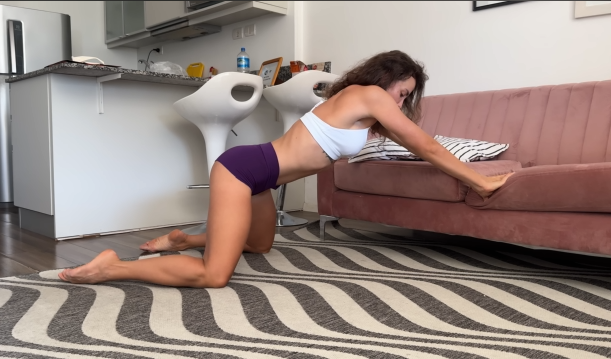
As your body begins to warm up, it’s time to shift into a more dynamic stretch. Move onto your hands and knees for the cat-cow stretch. Position your hands directly under your shoulders and your knees under your hips. As you inhale, arch your back downward, lifting your head and tailbone—this is the “cow” position. As you exhale, round your spine upward, tucking your chin and pelvis—this is the “cat” position. Flow between these two movements slowly, matching your breath with each motion. This exercise is excellent for improving flexibility and relieving stiffness along the entire spine.
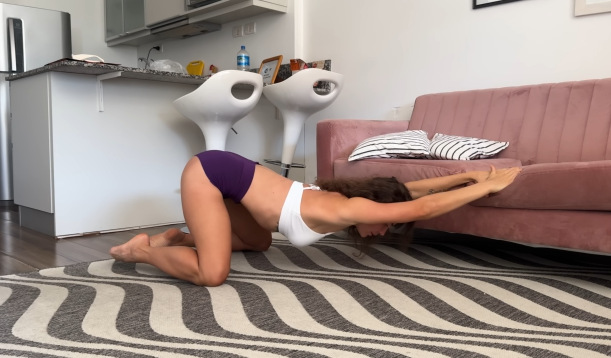
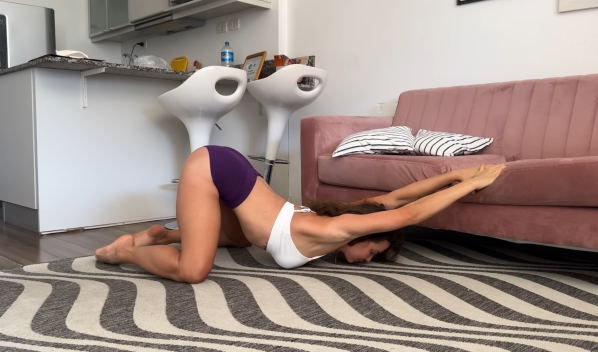
Another essential stretch in Chebyjane’s routine is the child’s pose. From the hands-and-knees position, gently push your hips back toward your heels while extending your arms forward. Lower your forehead toward the ground and relax your entire body into the stretch. This pose provides a deep, soothing stretch for the lower back while also calming the mind. Stay here for at least 30 seconds, or longer if it feels good.
To target the hips—which are closely connected to lower back tension—try the figure-four stretch. Lie on your back again, cross one ankle over the opposite knee, and gently pull the uncrossed leg toward your chest. You’ll feel a stretch in your hip and glute, areas that often contribute to lower back discomfort when tight. Hold, breathe, and then switch sides.
As the routine continues, incorporate a gentle forward fold. Sit with your legs extended in front of you, keeping your spine straight. Slowly reach forward toward your toes, hinging at the hips rather than rounding your back excessively. You don’t need to touch your toes—just go as far as your flexibility allows. This stretch lengthens the hamstrings, which play a key role in supporting the lower back.
To finish the routine, return to a lying position and take a moment to relax. Let your arms and legs fall naturally, close your eyes, and focus on your breathing. Notice how your body feels compared to when you started. Even a short session like this can bring noticeable relief and a sense of lightness.
What makes Chebyjane’s routine so effective is its simplicity and accessibility. It’s not about intensity—it’s about consistency. Practicing these stretches daily, even for just 10 to 15 minutes, can significantly improve your mobility, reduce pain, and prevent future issues.
It’s also important to move mindfully. Never force a stretch or push through sharp pain. Stretching should feel relieving, not punishing. Over time, your flexibility will naturally improve as your muscles become more relaxed and responsive.
Incorporating this routine into your daily life can be a game-changer. Whether you do it in the morning to wake up your body, during a break to reset your posture, or in the evening to unwind, these stretches help reconnect you with your body in a meaningful way.
Lower back pain doesn’t have to be a constant struggle. With gentle care, regular movement, and a routine like this, you can take control of your physical well-being—one stretch at a time.
And sometimes, the simplest movements bring the greatest relief.