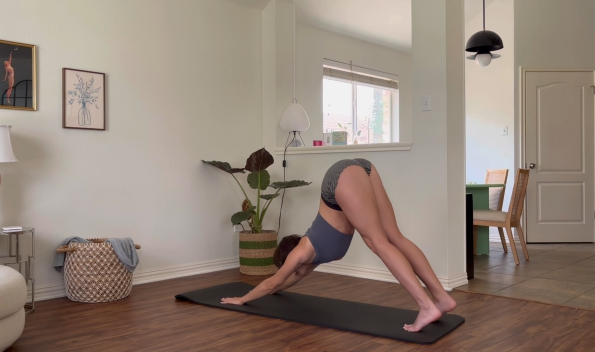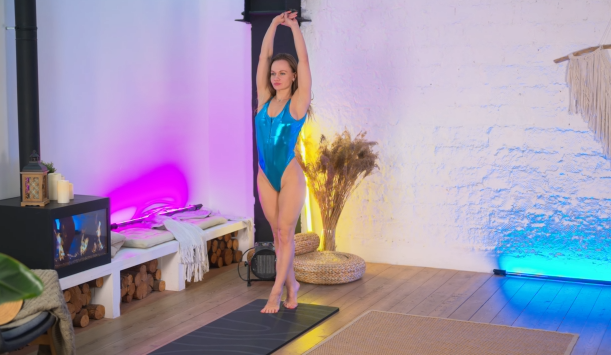
The world moves quickly.
Deadlines, responsibilities, notifications, and expectations all seem to stack on top of one another, creating a quiet but constant pressure. Sometimes, you don’t even notice how tense your body has become—until you pause.
This is your pause.
A moment carved out of the noise. A space where nothing is required of you except to breathe, to move gently, and to reconnect with yourself.
Find a comfortable place.
You can sit on the floor, on a mat, or even on a chair. What matters is not where you are, but how you arrive. Let your spine rise naturally, your shoulders soften, your hands rest wherever they feel most at ease.
Close your eyes.
Take a slow, deep breath in through your nose.
Hold for just a moment.
Then exhale softly through your mouth.
Again.
Inhale… slow, steady, filling your lungs completely.
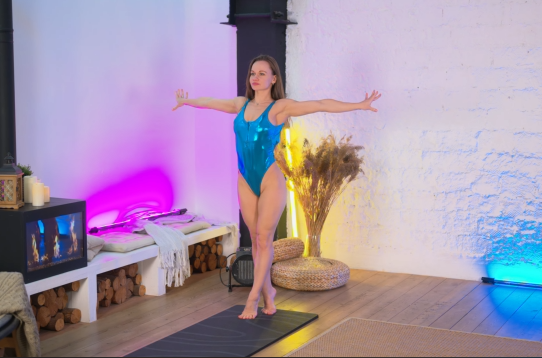
Exhale… longer this time, releasing tension as if you’re letting go of something heavy.
This is where it begins.
Not with movement, but with awareness.
Notice your body. Notice where you feel tightness—your neck, your shoulders, your lower back. There’s no need to fix anything right now. Just observe.
Now, gently begin.
Let your right ear drift toward your right shoulder. Don’t force it. Just allow gravity to guide the movement. Feel the stretch along the left side of your neck.
Breathe into it.
Inhale.
Exhale, and let your shoulders drop even more.
Return slowly to center.
Switch sides.
Each movement is small, but meaningful. With slow breathing, even the simplest stretch becomes powerful.
Now bring your shoulders into motion.
Inhale as you lift them up toward your ears.
Exhale as you roll them back and down.
Again.
Inhale, lift.
Exhale, roll and release.
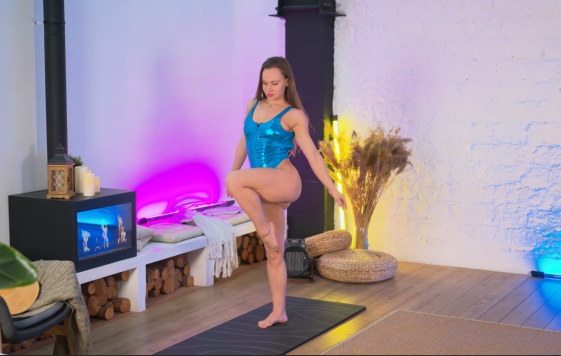
Let the movement be slow, almost exaggerated in its softness. Feel the tension melting away with each rotation.
Reverse the direction.
Stay present.
Now, bring your hands to your thighs or knees.
As you inhale, gently arch your back, lifting your chest forward, your gaze soft.
As you exhale, round your spine, drawing your chin toward your chest.
Flow between these two movements.
Inhale… open.
Exhale… round.
This gentle wave through your spine helps release deep tension stored in your back and shoulders. Let your breath guide you—never rushing, never forcing.
Pause at center.
Take a deep breath in.
Now, slowly raise your arms overhead. Let them float upward with your inhale, your palms facing each other.
Reach gently.
Not to strain, but to create space.
As you exhale, lower your arms slowly, like leaves drifting down.
Repeat.
Inhale, rise.
Exhale, release.
Feel the rhythm.
Now, bring one arm up again, and lean gently to the opposite side. Keep both sit bones grounded if you’re seated. Allow your body to create a soft curve, opening the side of your torso.
Breathe into the stretch.
Inhale.
Exhale, soften.
Return to center.
Switch sides.
Notice the difference between the two sides. Your body is always communicating—this is your chance to listen.
Now, extend one leg forward if you’re seated, or step one foot slightly ahead if you’re standing.
Flex your foot gently.
With a long spine, hinge forward just a little. You don’t need to go far. The goal is not depth—it’s sensation.
Feel the stretch along the back of your leg.
Breathe slowly.
Then return.
Switch sides.
Every movement is paired with breath. This connection is what transforms stretching into stress relief. Without breath, it’s just movement. With breath, it becomes release.
Come back to a comfortable position.
Place one hand on your chest, the other on your belly.
Take a deep breath in through your nose.
Feel your belly rise first, then your chest.
Exhale slowly.
Feel everything fall.
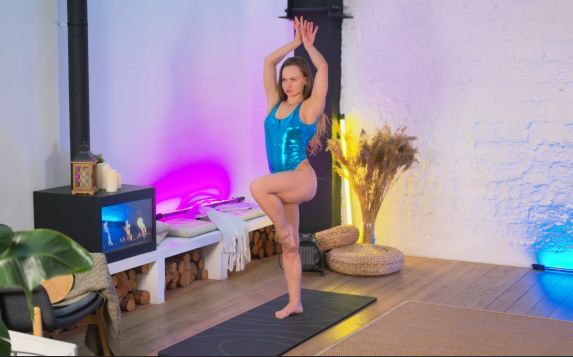
This is diaphragmatic breathing—a simple but powerful way to calm your nervous system. It tells your body that it’s safe to relax.
Stay here for a few breaths.
Now, gently twist your body to one side. Place one hand on the opposite knee and the other behind you for support.
Inhale, lengthen your spine.
Exhale, deepen the twist slightly.
Keep it gentle.
Return to center.
Switch sides.
Twists help release tension in the spine and improve circulation, but they also encourage a sense of letting go—of releasing what you’ve been holding onto.
Come back to center again.
Let your hands rest comfortably.
Take a moment to notice how you feel.
Your body may feel lighter.
Your breath deeper.
Your mind quieter.
This is the effect of slow, intentional movement.
Now, if you’re comfortable, gently fold forward. Let your upper body relax, your head hanging heavy. There is no effort here—just surrender.
Breathe.
Let gravity do the work.
Stay for a few moments.
Then slowly rise back up.
As you come to the end of this practice, bring your hands together at your heart.
Take one final deep breath in.
And a long, slow breath out.
Stress doesn’t always disappear completely—but it softens. It loosens its grip. And in its place, you create space.
Space for calm.
Space for clarity.
Space for yourself.
Open your eyes gently.
Carry this feeling with you.
Because you don’t need an hour or a perfect setting to find peace. Sometimes, all it takes is a few slow breaths… and the willingness to move gently.
And in that simplicity, you’ll find something powerful.
Relief. 🌿✨