The room was warm, not from heat, but from movement.
Soft light filtered through tall windows, settling gently across a row of mats. The quiet hum of controlled breathing filled the space, steady and intentional. This was not a rushed workout, not a high-energy class filled with noise and urgency.
This was something deeper.
A practice of control, awareness, and patience.
At the center of it all was one goal: unlocking the hips.
For many, hip mobility is one of the most challenging aspects of flexibility. Hours of sitting, limited movement patterns, and everyday habits slowly tighten the muscles surrounding the hips, creating resistance that feels almost permanent.
But the body is adaptable.
And with the right approach, it can change.
The session began with stillness.
“Before we move,” the instructor said calmly, “we listen.”
Everyone sat cross-legged, eyes soft, attention turned inward. Breath slowed. Muscles softened.
Only then did the movement begin.
The first phase focused on gentle activation—awakening the hips without force. Slow circles of the knees, controlled rotations, and light engagement of the surrounding muscles prepared the body for deeper work.
“Mobility isn’t just flexibility,” the instructor continued. “It’s strength within that flexibility.”
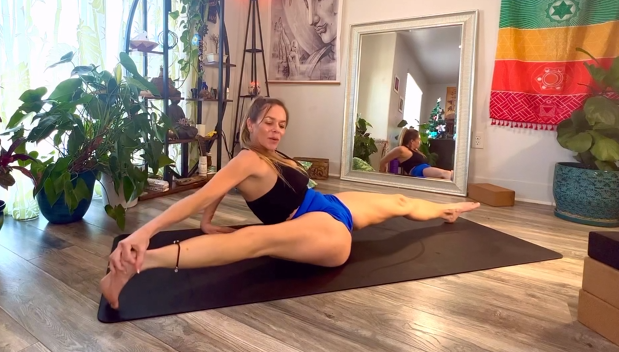
From there, they transitioned into deeper positions, starting with Pigeon Pose.
One leg folded forward, the other extended behind.
For many, this was already intense.
The hips resisted, the body instinctively trying to protect itself from unfamiliar depth. But instead of pushing through, the instruction was simple:
“Breathe into it.”
With each exhale, tension softened slightly. Not dramatically, but enough.
Enough to stay.
Enough to progress.
The focus wasn’t on how deep the pose looked, but how it felt.
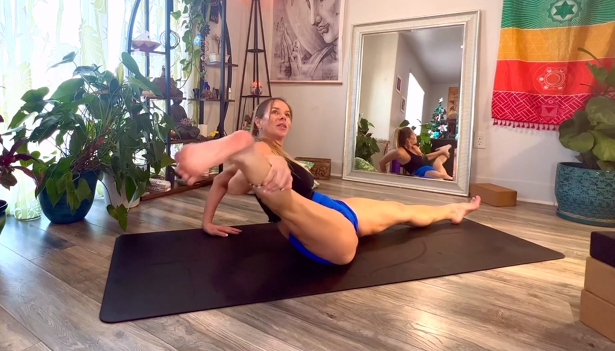
From Pigeon Pose, they moved into dynamic transitions—lifting, shifting, and re-entering the stretch to build both flexibility and control.
Then came a deeper challenge.
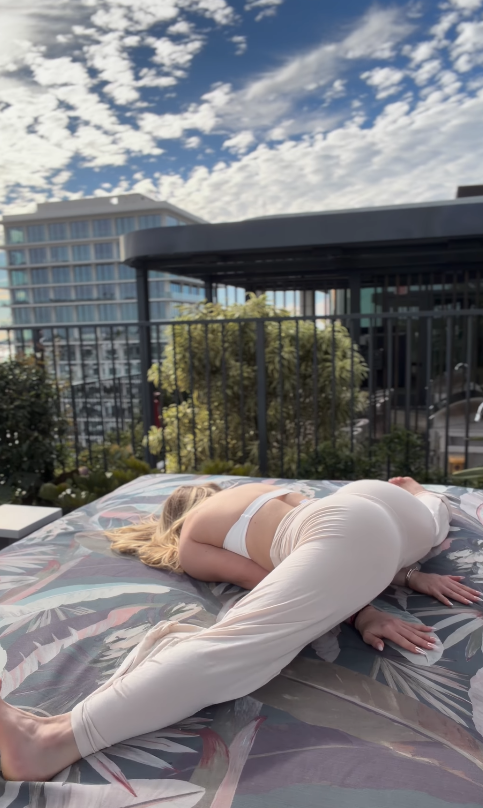
The Frog Pose.
Knees wide, hips sinking back, inner thighs lengthening under controlled pressure.
This was where many people struggled.
The stretch was intense.
Unforgiving.
But also transformative.
Participants adjusted their positions—some lowering onto their forearms, others staying higher. There was no single “correct” depth.
Only the depth that allowed breath to remain steady.
Because breath was the guide.
Without it, the body would resist.
With it, the body would open.
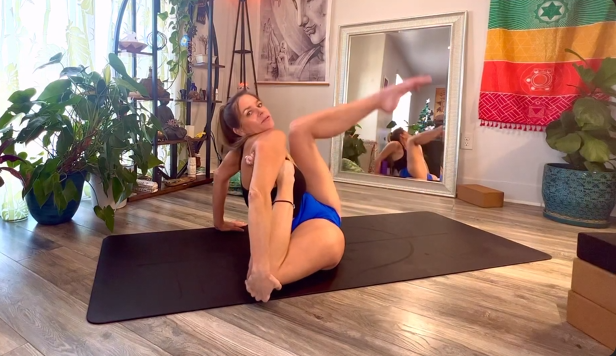
As the session progressed, elements of Contortion were introduced—not as performance, but as exploration.
Controlled backbends began to appear.
Hip flexors were stretched deeply.
Spinal mobility increased.
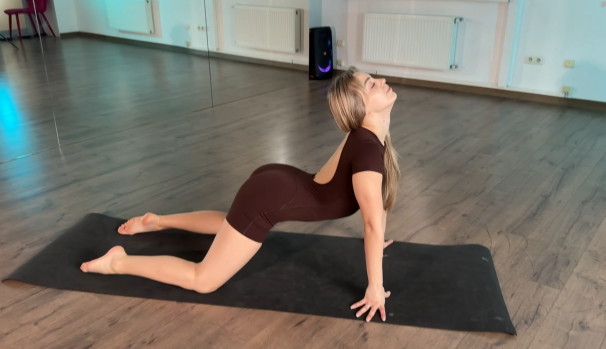
One sequence involved transitioning from a low lunge into a deep backbend, reaching arms overhead while maintaining stability in the hips.
It required strength.
Not just flexibility.
Because true mobility means being able to control the range you create.
Across the room, participants experienced different challenges.
Some struggled with tight hip flexors, feeling resistance in lunges and backbends.
Others found the inner thighs limiting their ability to move deeper into wide positions.
But no one was rushed.
No one was pushed beyond what their body could handle.
Instead, the routine emphasized consistency.
Small improvements.
Subtle changes.
Because that’s how real flexibility is built.
Slowly.
Intentionally.
One participant, Dara, had always found hip mobility frustrating. Despite regular workouts, his hips felt stiff, unresponsive.
But today was different.
After spending time in controlled stretches and incorporating active engagement, he noticed something new.
Space.
As he moved into a deeper lunge, his hips didn’t resist as much.
His body allowed it.
Not completely.
But more than before.
And that was enough.
Nearby, Lina worked through a deep seated stretch, rotating her hips while maintaining an upright posture. Her focus wasn’t on depth, but on control—keeping her movements smooth and steady.
She had learned something important over time:
Flexibility without control leads to instability.
Control without flexibility leads to limitation.
The balance between the two is where progress lives.
The routine continued with flowing sequences that combined elements of Yoga and targeted mobility drills.
Movements were slow, deliberate.
Each transition served a purpose.
Each position built upon the last.
There was no wasted motion.
By the time they reached the peak of the session, the body felt different.
Warmer.
More open.
More responsive.
This was the moment to explore deeper ranges safely.
Some participants moved into near-split positions.
Others explored deeper backbends.
A few attempted advanced contortion shapes, carefully entering and exiting with full awareness.
There was no pressure to achieve.
Only permission to try.
And to learn.
Finally, the intensity began to ease.
They transitioned into gentle stretches—counterposes designed to bring the body back to neutral.
Forward folds.
Soft twists.
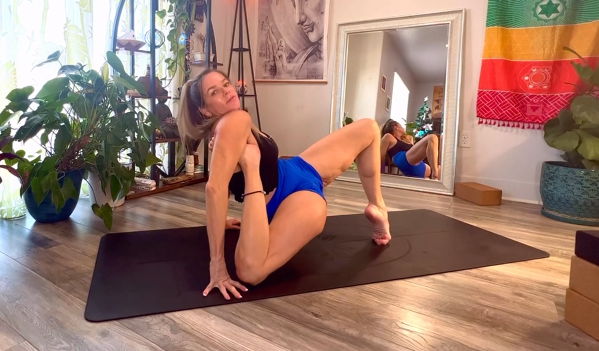
Relaxed hip rotations.
The breath slowed again.
The effort faded.
And then came stillness.
Lying on their backs, eyes closed, bodies heavy against the mat.
This was where everything settled.
“Notice the difference,” the instructor said quietly.
And there was a difference.
The hips felt lighter.
Movement felt smoother.
Even simple positions carried less resistance.
Not because the body had been forced…
But because it had been guided.
Given time.
Given attention.
Given respect.
As the session ended, participants sat up slowly, taking a moment before returning to the outside world.
Contortion, hip mobility, flexibility—these weren’t just physical goals.
They were practices of patience.
Of listening.
Of understanding the body on a deeper level.
Because in the end, flexibility isn’t about how far you can stretch.
It’s about how well you can move.
And how deeply you can connect…
To the body you live in every day.