
It starts with hesitation.
Your palms press into the mat, fingers spread wide, gripping the surface as if it might slip away. Your shoulders tighten, your core braces, and your mind—loud, relentless—begins its usual chatter.
What if I fall?
What if I can’t do this?
You glance around the room. Others seem to float effortlessly upside down, legs reaching toward the ceiling like they belong there. Their breathing is calm, their faces soft, as if gravity has made a quiet agreement with them.
You, on the other hand, feel like you’re negotiating with chaos.
“Trust your foundation,” the instructor says gently.
You take a breath.
And then, slowly, you lift one leg.
Then the other.
For a moment, nothing happens.
And then—everything changes.
Your world flips.
Literally.
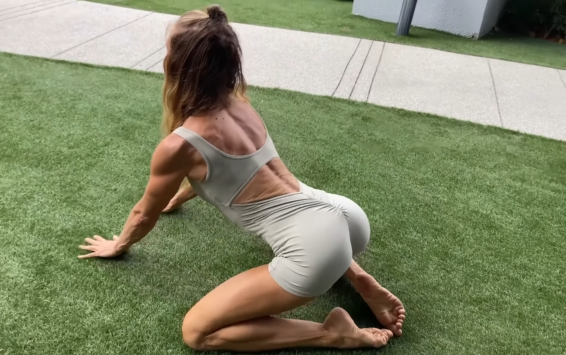
The ground is no longer beneath your feet but above your head. Your arms tremble as they carry the weight your legs once did without effort. Your balance feels uncertain, your thoughts scramble to catch up with your body, and your breath stutters.
But then… something unexpected happens.
Stillness.
It arrives quietly, like a wave settling after a storm.
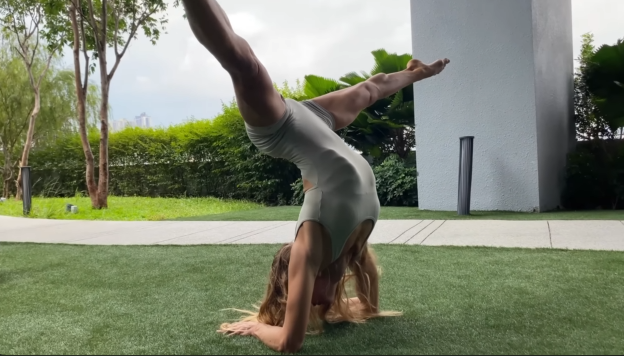
Your body adjusts. Your shoulders stack over your wrists. Your core engages just enough. Your legs extend upward, finding a line that feels—surprisingly—natural.
And in that moment, something clicks.
This is the beginning of the inversion high.
Inversions—whether it’s a headstand, a handstand, or a forearm balance—are more than just physical postures. They are an invitation to see the world differently, to challenge not just your strength, but your perception.
Because when you turn your body upside down, your mind has no choice but to follow.
At first, it’s all effort.
Your arms shake. Your breath feels uneven. Every second feels like a small victory. You count your breaths, hoping to stay just a little longer.
One.
Two.
Three.
And then you come down, your feet meeting the mat with a soft thud. You sit back, heart racing, a mix of relief and exhilaration washing over you.
“I did it,” you whisper.
Even if it was only for a second.
Even if it wasn’t perfect.
You did it.
And that feeling—that spark of accomplishment—lingers.
The next time you try, it’s different.
Your body remembers.
Your hands find their place more confidently. Your shoulders engage more quickly. Your mind, though still cautious, is a little quieter.
You kick up again.
And this time, you stay longer.
Something shifts.
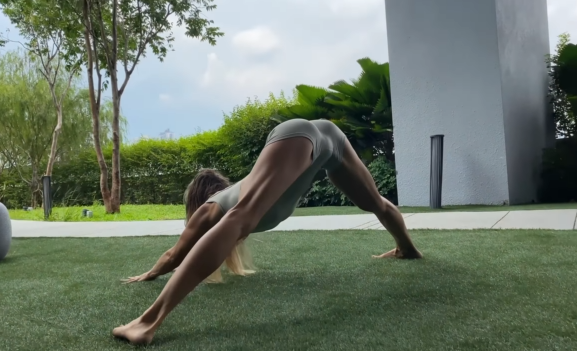
The fear doesn’t disappear completely, but it softens. It becomes less of a wall and more of a whisper. You start to trust your body in a way you didn’t before.
And then, one day, it happens.
You rise into the inversion—and instead of tension, you feel ease.
Your breath flows smoothly. Your body feels light, almost buoyant. The effort is still there, but it’s no longer overwhelming. It’s controlled, balanced, alive.
You’re not just holding the pose.
You’re inhabiting it.
And that’s when the high begins.
It’s not the kind of high that comes from speed or noise or intensity. It’s quieter than that. Deeper.
It’s the feeling of being completely present.
Upside down, the world looks unfamiliar. The ceiling becomes the ground. The people around you are inverted shapes, moving in ways that feel almost dreamlike. The usual distractions fade away, replaced by a singular focus: balance, breath, and being.
There’s no room for overthinking.
No space for worry.
Just this moment.
Just this breath.
Your heart beats steadily, your mind clears, and for a brief, beautiful time, everything aligns.
That’s the yoga high.
It’s not just physical—it’s mental, emotional, even a little bit spiritual.
Because in that upside-down space, you learn something important.
You learn that your limits are often illusions.
You learn that fear can be faced, softened, and even transformed.
You learn that strength isn’t just about muscles—it’s about trust.
Trust in your body.
Trust in your breath.
Trust in yourself.
And perhaps most importantly, you learn to fall.
Because you will fall.
Everyone does.
There will be moments when your balance slips, when your legs tip too far, when gravity reminds you who’s in charge. You’ll tumble out of the pose, sometimes gracefully, sometimes not.
At first, it’s frustrating.
You might feel embarrassed, especially if others seem to hold their inversions with ease. You might question whether you’re strong enough, flexible enough, or capable enough.
But then, something shifts.
You realize that falling isn’t failure.
It’s part of the process.
Each fall teaches you something—how to adjust your weight, how to engage your core, how to trust yourself a little more. Over time, the fear of falling loses its power.
You stop resisting it.
You even start to embrace it.
Because every fall brings you closer to that moment of balance.
And when you finally find it again—when you rise into the inversion and hold it with steady breath and quiet confidence—it feels even more rewarding.
That’s the paradox of inversions.
They demand effort, but they give you freedom.
They challenge your body, but they calm your mind.
They turn your world upside down, only to help you find your center.
Off the mat, the effects linger.
You notice it in small ways.
In how you handle stress—with a little more patience.
In how you face challenges—with a little more courage.
In how you move through your day—with a little more awareness.
Because once you’ve learned to be comfortable upside down, the right-side-up world doesn’t feel quite as overwhelming.
You’ve seen things from a different perspective.
You’ve felt what it’s like to let go of control, even just for a moment.
And you carry that with you.
The yoga high isn’t about mastering a pose.
It’s about the journey of getting there.
It’s about the breaths you take, the fears you face, the falls you learn from, and the moments of stillness you discover along the way.
So the next time you place your hands on the mat, hesitating just a little, remember this:
You don’t have to be perfect.
You don’t have to be fearless.
You just have to be willing.
Willing to try.
Willing to fall.
Willing to rise again.
And when you do—when you finally find that balance, that breath, that quiet sense of ease—you’ll understand.
The world may be upside down.
But somehow, everything feels exactly right.