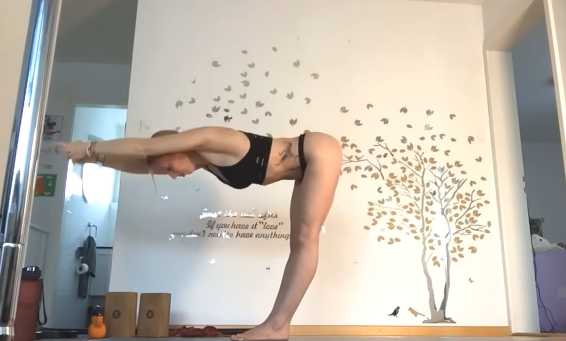
The studio was quiet except for the soft hum of a ceiling fan and the occasional creak of a yoga mat shifting against the wooden floor. Sunlight streamed in through the tall windows, casting long, warm shadows that danced with every movement. It was supposed to be a clean, polished recording session—graceful backbends, controlled splits, and a flawless demonstration of strength and flexibility. But like many things in life, perfection had other plans.
“Okay, let’s try that again,” Rhyanna said with a small laugh, brushing a loose strand of hair from her face. Even as a seasoned yoga and fitness teacher, she knew that what people saw in final videos was only part of the story. The truth—the real, human side of practice—lived in the outtakes.
She stepped to the center of the mat, grounding herself with a steady breath. Her posture was confident yet relaxed, the kind that came from years of training and deep body awareness. Today’s focus was on backbends and splits—two areas that demanded not just flexibility, but precise muscle control.
“Remember,” she said, glancing at the camera, “this isn’t just about bending or going deep into a pose. It’s about control. It’s about understanding your body.”
She began with a gentle warm-up, rolling her shoulders and moving through a slow cat-cow sequence. Her spine flowed like a wave, each movement smooth and intentional. But just as she transitioned into a deeper stretch, her elbow slipped slightly on the mat.
“Oops—there it is,” she laughed, shaking her head. “Outtake number one.”
Moments like this broke the illusion of perfection. They reminded everyone watching—whether live or later—that even experts stumble. And that was part of the beauty.
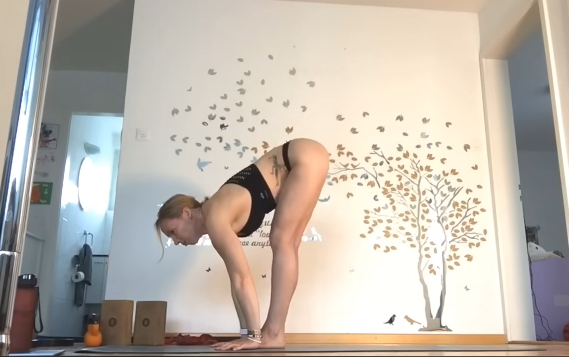
As the warm-up continued, Rhyanna moved into her first backbend. She planted her hands firmly, pressed her feet into the mat, and lifted into a strong wheel pose. Her arms straightened, her chest opened, and her breath remained steady. It was a powerful display of strength and flexibility working in harmony.
But holding the pose required more than just bending backward. Every muscle had a role to play. Her glutes engaged to support her lower back. Her core tightened to stabilize the spine. Her shoulders worked hard to keep her arms steady. It was a full-body effort, even if it looked effortless from the outside.
She held the pose for a few seconds, then slowly lowered herself back down.
“Control,” she said, pointing gently to her midsection. “That’s what keeps you safe.”
On the next attempt, however, things didn’t go quite as smoothly. As she pushed up into the pose, her foot shifted just slightly out of place, throwing off her balance.
“Okay, that was not graceful,” she admitted, laughing as she reset. “But it happens! Even teachers have off moments.”
The room filled with a light, encouraging energy. There was no frustration, no harsh self-criticism—just acceptance and a willingness to try again.
Next came the splits. Rhyanna positioned herself carefully, sliding one leg forward and the other back. Her movements were slow and controlled, ensuring that she didn’t strain any muscles. She paused halfway, engaging her thighs and core to hold the position.
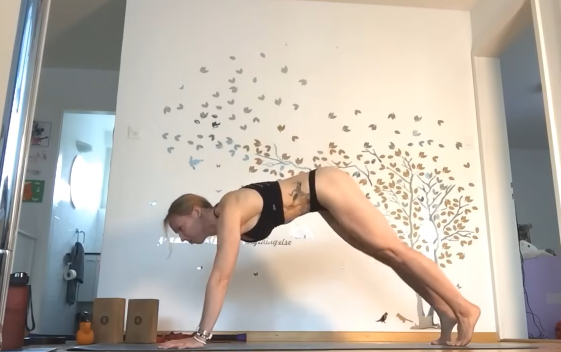
“This is where muscle control really shows,” she explained. “Flexibility might get you into the split, but strength keeps you there.”
She lowered a little further, hovering just above the mat. It was a moment of pure control—her body steady, her breath calm. Then, unexpectedly, her front foot slipped forward just a bit too far.
“Oh no—too ambitious!” she laughed, quickly catching herself with her hands. “That’s what I get for trying to show off.”
The outtakes continued, each one offering a glimpse into the reality behind the practice. A slight wobble here, a misstep there—nothing dramatic, but enough to remind viewers that progress is never perfectly linear.
Between attempts, Rhyanna shared tips and insights. She talked about the importance of warming up properly, especially for deeper poses like backbends and splits. She emphasized listening to the body, respecting its limits, and avoiding the temptation to push too far too quickly.
“Your body is not a machine,” she said gently. “It’s something you build a relationship with.”
At one point, she attempted a more advanced variation—a standing split transitioning into a backbend. It required precise timing, balance, and coordination. She moved into the pose with confidence, lifting her leg high and arching her back.
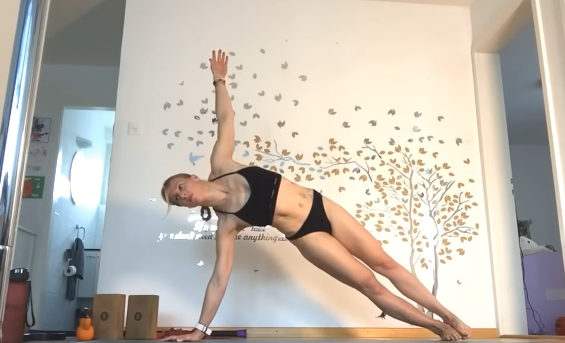
For a brief moment, everything aligned perfectly.
Then she lost her balance.
With a quick step and a burst of laughter, she caught herself before falling.
“And that,” she said, still smiling, “is why we practice.”
The room echoed with her laughter, but there was also something deeper beneath it—a sense of resilience. Every outtake wasn’t a failure; it was part of the process. It was proof that growth comes from trying, adjusting, and trying again.
As the session went on, the line between “mistake” and “lesson” began to blur. Each slip became an opportunity to understand the body better. Each wobble highlighted an area for improvement. And each recovery demonstrated strength—not just physical, but mental as well.
By the time the recording wrapped up, the floor was scattered with the invisible traces of effort: beads of sweat, deep breaths, and countless small adjustments. Rhyanna sat cross-legged on her mat, her expression calm and content.
“You know,” she said thoughtfully, “these outtakes might be my favorite part.”
She looked at the camera, her eyes warm and sincere.
“Because this is real. This is what practice looks like.”
In a world where polished perfection often takes center stage, moments like these offered something refreshing—authenticity. They showed that even those who teach and inspire are still learning, still growing, still human.
As the sunlight shifted and the session came to an end, one thing was clear: yoga and fitness were not about flawless execution. They were about connection, patience, and the journey of understanding your own body.
And sometimes, the most meaningful progress happens in the outtakes.