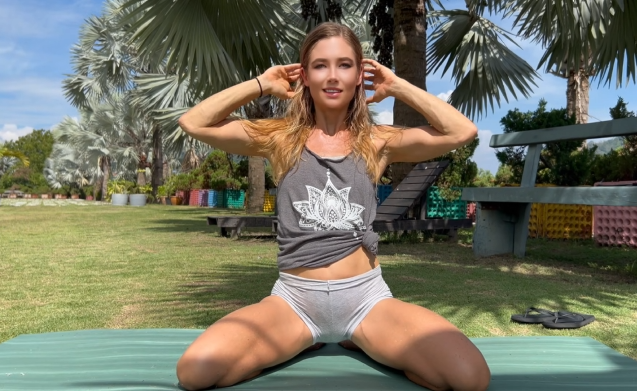
If your hips feel stiff, your hamstrings pull every time you bend forward, or your lower back complains after sitting too long, you’re not alone. Tight hips and hamstrings are incredibly common, especially in modern lifestyles where we spend hours sitting. But instead of forcing deep stretches or pushing through discomfort, somatic yoga offers a gentler, smarter way to release tension from within.
This follow-along guide will walk you through a somatic yoga sequence designed to retrain your muscles, improve mobility, and help your body feel lighter and freer—without strain.
What Is Somatic Yoga?
Somatic yoga focuses on slow, mindful movements that reconnect your brain and muscles. Instead of stretching to the maximum, you move in and out of positions with control, teaching your nervous system to release chronic tension.
When your hips and hamstrings are tight, it’s often not just about short muscles—it’s about muscles that have forgotten how to relax. Somatic movement helps restore that balance.
Before You Begin
Find a quiet space where you can lie down comfortably. A yoga mat or soft surface works best. Move slowly, breathe naturally, and never force any movement. The goal is awareness, not intensity.
1. Constructive Rest Position
Start by lying on your back with your knees bent and feet flat on the floor, hip-width apart. Let your arms rest comfortably by your sides.
Close your eyes and take a few slow breaths. Notice how your lower back, hips, and legs feel against the ground.
Stay here for about a minute.
This position helps your body settle and prepares your nervous system for deeper release.
2. Pelvic Tilt Awareness
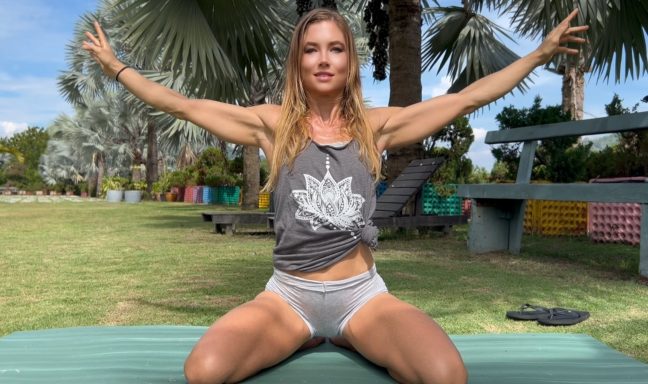
From your resting position, gently tilt your pelvis so your lower back presses slightly into the floor. Then slowly release and let your back arch naturally.
Move back and forth between these two positions very slowly.
Inhale as you tilt, exhale as you release.
Repeat 8–10 times.
This simple movement begins to wake up the muscles around your hips and lower back while improving control and awareness.
3. Slow Knee-to-Chest Movement
Bring one knee toward your chest using your hands, but don’t pull it forcefully. Just guide it gently.
Hold for a breath, then slowly lower it back down.
Repeat 5 times on one side, then switch to the other.
Notice the difference between sides. One hip may feel tighter than the other—that’s completely normal.
This movement helps release tension in the hip joint and surrounding muscles.
4. Pandiculation for Hamstrings
Extend one leg straight on the floor. Bend the other knee with your foot flat.
Now, slowly slide the straight leg along the floor, bending it slightly, then extend it back out.
Move slowly and with control.
Repeat 8 times on each side.
This is a somatic technique called pandiculation—it contracts and releases the muscle gently, teaching it to relax more effectively than static stretching.
5. Hip Clock Movement
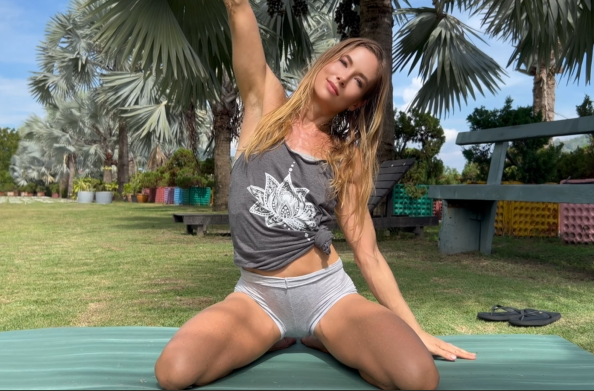
Imagine your pelvis is a clock.
Gently tilt your hips toward 12 o’clock (flatten your lower back), then toward 6 o’clock (arch slightly), then side to side (3 and 9 o’clock).
Move slowly around this imaginary clock.
Do this for about 1–2 minutes.
This movement improves mobility in all directions and helps release deep tension patterns in the hips.
6. Gentle Figure-Four Movement
Cross one ankle over the opposite knee, creating a figure-four shape.
Instead of pulling the leg in deeply, gently move the crossed leg slightly away and back, like a small rocking motion.
Keep it subtle and controlled.
Repeat for 1 minute on each side.
This targets the outer hips and glutes without overstretching, which is key in somatic practice.
7. Seated Forward Fold (Somatic Style)
Slowly come up to a seated position with your legs extended in front of you.
Instead of reaching forward aggressively, place your hands on your thighs.
As you exhale, gently slide your hands down your legs, stopping at the first point of resistance.
Then slowly come back up.
Repeat 6–8 times.
Each time, you may notice you go slightly further—not because you’re forcing it, but because your muscles are letting go.
8. Standing Roll Down
Stand up slowly.
Begin to roll down through your spine, starting from your head, then your neck, shoulders, and back.
Let your arms hang heavy.
Bend your knees slightly if needed.
Stay at the bottom for a breath, then slowly roll back up.
Repeat 5 times.
This integrates the work you’ve done and helps your body apply the new freedom of movement in a functional position.
Final Rest and Integration
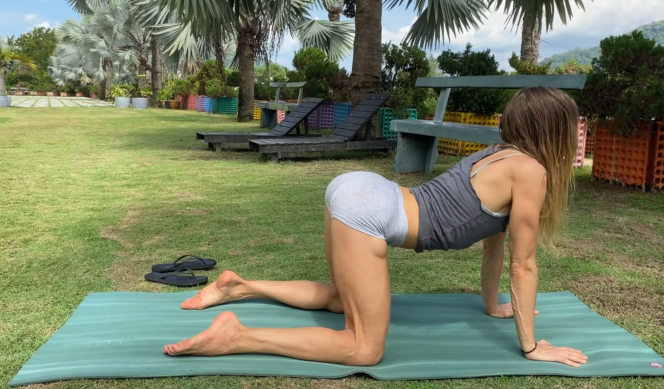
Lie back down again in the constructive rest position.
Notice how your hips, hamstrings, and lower back feel now compared to the beginning.
Take a few deep breaths and allow your body to absorb the changes.
Why This Works
Unlike traditional stretching, somatic yoga works with your nervous system. Tightness often comes from your brain keeping muscles in a constant state of contraction. By moving slowly and mindfully, you teach your brain that it’s safe to release that tension.
Over time, this leads to:
- Greater flexibility
- Reduced pain and stiffness
- Improved posture
- Better movement efficiency
Tips for Best Results
Practice this routine 3–4 times per week for lasting results. Move slowly, stay present, and focus on how each movement feels rather than how far you can go.
Consistency matters more than intensity.
Closing Thoughts
Tight hips and hamstrings don’t need to be forced into submission. With somatic yoga, you’re not fighting your body—you’re working with it.
By reconnecting with your natural movement patterns, you’ll not only feel more flexible but also more relaxed, balanced, and in control.
Take your time, breathe deeply, and enjoy the process. Your body will thank you.