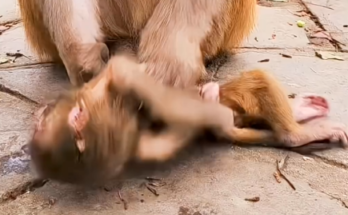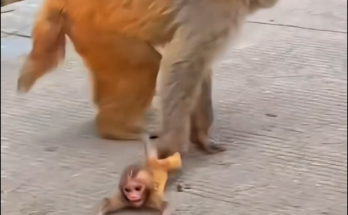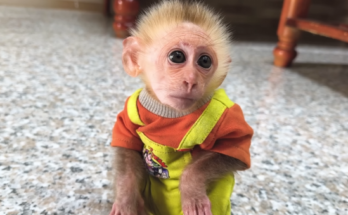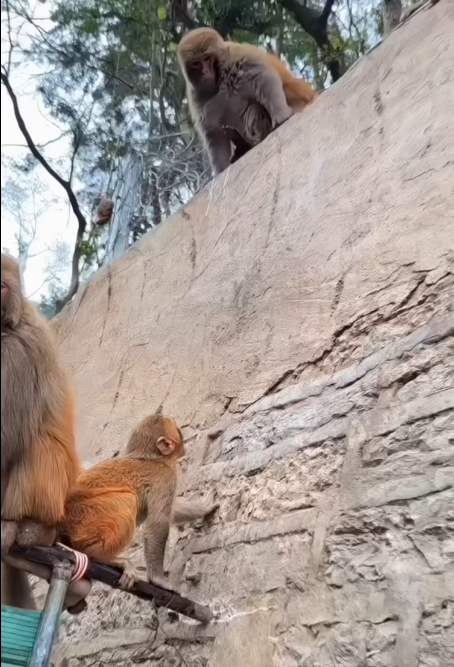
In the wild, the lives of monkeys are full of activity, hierarchy, and survival challenges, yet when observing them closely, one can notice behaviors that appear remarkably familiar to humans. Among these, parental care stands out as a striking example. To a casual observer, the way a mother monkey nurtures, protects, and guides her offspring may seem almost identical to human expressions of love and devotion. But while these behaviors resemble human love, the underlying motivations are a complex interplay of instinct, survival, and social strategy.
From the moment a monkey infant is born, it is entirely dependent on its mother. The newborn clings to her fur, relying on her for warmth, nutrition, and protection from the dangers of the forest or the savanna. A mother monkey’s attentiveness is immediate and intense. She carries her baby everywhere she goes, grooming it meticulously, and ensuring it stays close. Human observers often interpret this behavior as maternal affection, as the mother appears to show concern, patience, and even tenderness. Yet, in the monkey world, these actions are essential for the infant’s survival. Without such care, the newborn would not only struggle to find nourishment but would also be extremely vulnerable to predators or accidental injuries.
Nursing is the first and most crucial aspect of parental care. A mother’s milk provides the infant with critical nutrients and antibodies necessary for survival. The act of nursing, combined with constant contact, creates the illusion of affection, and indeed, the infant may develop strong bonds with the mother. This bond is vital, ensuring that the infant remains close to its protector and source of sustenance. While human parents may feed their children out of a complex mix of love, attachment, and social expectation, the monkey mother’s nursing is primarily instinctive. It is a biological imperative to ensure her genes are successfully passed to the next generation.
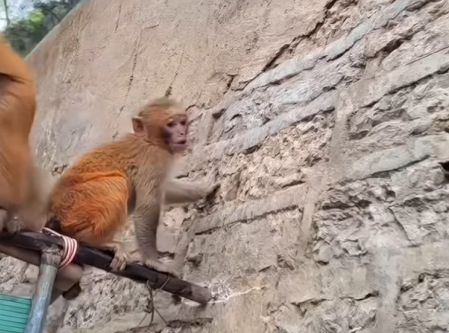
Grooming, another cornerstone of parental care, has both practical and social significance. Mothers spend hours grooming their offspring, removing dirt, parasites, and debris from their fur. To the human eye, this meticulous care might appear tender and affectionate. The infant, in turn, may respond with playful gestures or contented movements, reinforcing the perception of a loving relationship. However, grooming also serves a crucial survival function: it keeps the infant healthy, reduces disease risk, and teaches the young monkey hygiene habits that are vital in the wild. Grooming is both practical and educational, and while it resembles human expressions of love, it is deeply tied to the infant’s well-being and survival.
Protection is another vital aspect of monkey parental care that resembles human caregiving. Mothers are vigilant, constantly monitoring the surroundings for threats. They position themselves strategically to shield their infants from predators, aggressive troop members, or environmental hazards. Alarm calls and swift responses to danger demonstrate a high level of awareness and protective behavior. Human parents also exhibit vigilance, but in monkeys, this is an instinctual and necessary adaptation; failure to protect can result in the loss of the next generation. The intensity of this vigilance often gives the impression of love and concern, but in reality, it is intertwined with reproductive success and evolutionary imperatives.
Parental teaching is also evident in monkey societies. Mothers show their infants how to climb, forage, and interact with other troop members. These lessons are critical for the survival and integration of the young monkey within the group. Human observers may interpret these interactions as nurturing and educational out of love, but in the wild, the mother’s goal is practical: a well-trained, socially adept offspring is more likely to survive, thrive, and continue her genetic lineage. Play, which often seems purely affectionate, also has an educational component. Through playful wrestling, chasing, and mock fighting, mothers help infants develop physical skills, coordination, and social understanding, all crucial for navigating the complexities of troop life.
Interestingly, some species of monkeys demonstrate alloparental care, where individuals other than the biological mother assist in raising the young. This includes older siblings, aunts, or even unrelated troop members. At first glance, these behaviors may appear to be acts of altruism or love. However, evolutionary biology suggests a strategic purpose behind these actions. By helping, these caretakers often strengthen social bonds, gain favor, or improve their own status within the group. Supporting a relative’s infant can enhance indirect genetic fitness. Even though the gestures are beneficial to the young, they are rarely driven by purely emotional attachment in the human sense.
Despite these practical underpinnings, it is undeniable that monkeys form strong bonds with their infants. The constant physical contact, vocalizations, and gentle guidance create a recognizable attachment that has parallels to human parental love. Infants respond to these interactions with trust, comfort, and attachment behaviors, and the visual cues of a mother cradling, grooming, and protecting her young evoke powerful emotional reactions from human observers. The resemblance is uncanny, making it easy to anthropomorphize. Yet, while the behavior is familiar, the motivations are often instinctive and survival-oriented rather than purely emotional.
Parental care in monkeys also illustrates flexibility and adaptability. Mothers adjust their behavior depending on the infant’s needs, environmental threats, and social dynamics. For instance, if food is scarce, mothers may prioritize feeding over grooming. If predators are near, vigilance takes precedence over play. This adaptive strategy ensures the infant’s survival and optimizes the mother’s energy expenditure—a balance between care and efficiency. Humans might interpret such adaptations as loving decision-making, but in monkeys, they are instinctual calculations driven by evolutionary pressures.
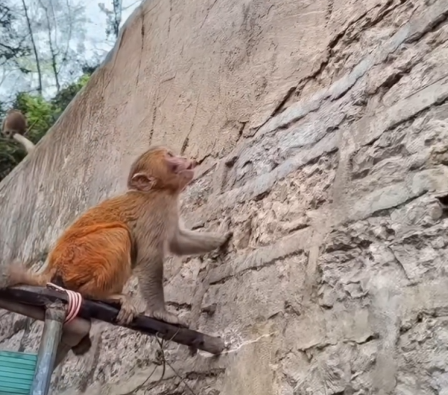
Occasionally, researchers have observed behaviors in monkeys that suggest a rudimentary form of empathy. Mothers console distressed infants, respond to cries, and sometimes even share food. These actions resemble human expressions of care and compassion. While the emotional depth behind these actions may not mirror human love, they highlight an advanced social intelligence that allows monkeys to respond effectively to the needs of their young. It is a form of practical empathy that ensures group cohesion and individual survival.
In conclusion, parental care in monkeys is a multifaceted behavior that closely resembles human love in appearance. Mothers nurture, protect, and guide their infants, creating bonds that are both functional and emotionally resonant. From nursing and grooming to protection, teaching, and social integration, every action serves the dual purpose of caring for the young and ensuring evolutionary success. Human observers are often struck by the tenderness, patience, and attachment displayed in these interactions, but it is important to recognize that these behaviors are deeply rooted in survival instincts, biological imperatives, and social strategy.
While the similarities to human parental love are striking, the differences are equally important. Monkey parental care is predominantly functional, instinctive, and strategic, whereas human love encompasses emotional depth, choice, and abstract concepts such as unconditional affection and moral responsibility. Understanding this distinction allows researchers and observers to appreciate the beauty of monkey behavior without imposing human interpretations that may obscure the evolutionary and ecological realities of their lives.
Ultimately, while humans may interpret monkey parental care as a mirror of our own capacity for love, it is a unique blend of instinct, intelligence, and survival strategy. It reminds us that love, as humans define it, may not be universal, yet nurturing, bonding, and protection are essential behaviors across species. In observing monkeys, we see the delicate balance between instinct and connection, between survival and care, and between the practical and the seemingly emotional—a fascinating insight into the lives of our closest animal relatives.