The beach was always alive.
Waves rolled endlessly toward the shore, children laughed as they chased each other across the sand, and the salty breeze carried the scent of food from nearby stalls. It was a place full of life, movement, and joy. But among all the noise and color, there was one quiet soul who lived a very different story.
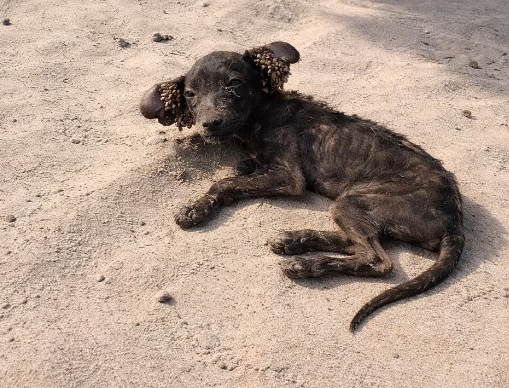
A small puppy.
No one knew exactly when he first appeared. Some said he wandered in from a distant village. Others believed he had been abandoned by someone who could no longer care for him. Whatever the truth was, the little puppy had made the beach his home.
He was small, with sandy-colored fur that almost blended into the shore itself. His ribs were slightly visible, and his ears always seemed to droop just a little, as if weighed down by something invisible. Yet his eyes—his eyes were soft and patient, filled with a quiet kind of hope.
Every morning, before the beach became crowded, the puppy would wake up near a cluster of rocks where he usually slept. He would stretch his tiny body, shake off the sand clinging to his fur, and look out at the ocean as if greeting it.
The sea was his only constant companion.
As the day began, people slowly filled the beach. Vendors set up their stalls, families spread out mats, and tourists walked along the shoreline taking photos. The puppy would watch them all from a distance at first, careful not to get too close.
He had learned something important about humans—some were kind, and some were not.

But unlike many stray animals, no one ever chased him away.
Perhaps it was because he never caused trouble. He didn’t bark loudly or steal food aggressively. He simply waited. He would sit a few meters away from people eating, his tail gently wagging, his eyes quietly asking a question he could never voice.
Sometimes, someone would notice.
A child might walk over and drop a small piece of bread. A vendor might toss him scraps at the end of the day. A couple enjoying their meal might share a little extra. These small moments were how he survived—living on leftovers, one bite at a time.
And yet, despite his situation, there was something about him that touched people.
He wasn’t desperate or wild. He was calm, almost gentle. When someone offered him food, he would approach slowly, carefully, as if he didn’t want to scare the kindness away. He would take the food softly, never snatching, never growling.
It was as if he understood that kindness was fragile.
Days turned into weeks, and weeks into months. The puppy grew a little bigger, but not by much. Life on leftovers wasn’t enough for him to truly thrive, but it kept him going.
Some regular visitors began to recognize him.
“There’s that beach puppy again,” they would say.
A fruit seller started leaving a small pile of scraps near the rocks every evening. A group of teenagers made it a habit to bring him snacks whenever they visited. Even the fishermen, who were usually too busy to notice much else, would sometimes toss him bits of fish.
Without anyone planning it, the beach had quietly become his community.
No one owned him, but no one rejected him either.
Still, as the sun set each evening and the beach slowly emptied, the puppy would return to his spot by the rocks. The laughter would fade, the footsteps would disappear, and the world would grow quiet again.
That was when his loneliness showed the most.
He would curl up on the cool sand, resting his head on his paws, and stare out at the darkening sea. The waves continued their endless rhythm, but there was no one beside him.
No warm home.
No gentle hand to comfort him.
No one to call his own.
Yet, even then, he never seemed bitter.
The next morning, he would wake up again, stretch, and face the day with the same quiet hope.
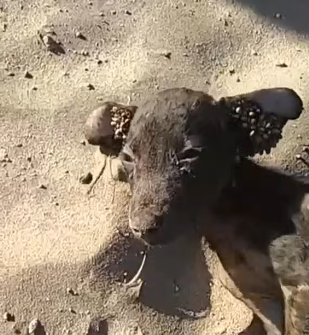
One afternoon, something unusual happened.
A young woman walking along the beach noticed him sitting alone. She had seen him before, always from a distance, always quietly observing. But this time, she stopped.
She crouched down slowly, not wanting to scare him.
“Hey there…” she said softly.
The puppy tilted his head, unsure but curious. He didn’t run away. Instead, he stayed still, watching her carefully.
She reached into her bag and pulled out some food. Instead of tossing it, she placed it gently on the sand in front of her. Then she waited.
The puppy hesitated.
Moments passed.
Then, slowly, step by step, he approached. His movements were cautious, but there was something else too—trust, fragile but present.
He ate the food quietly, then looked up at her.
For the first time, someone stayed.
The woman didn’t rush off. She didn’t just feed him and leave. She sat there, talking softly, letting him get used to her presence. Eventually, she reached out her hand.
The puppy flinched slightly—but didn’t run.
Her fingers gently touched his head.
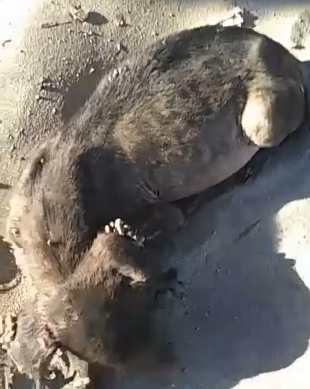
It was a small moment, but for the puppy, it meant everything.
Over the next few days, she returned.
Each time, the puppy greeted her with a little more excitement. His tail wagged faster. His steps became lighter. The distance between them disappeared.
People began to notice the change.
“The beach puppy has a friend,” someone said with a smile.
And it was true.
For the first time in his life on the beach, the puppy wasn’t just surviving—he was connecting.
One evening, as the sun dipped below the horizon, painting the sky in shades of orange and pink, the woman sat beside him as usual. She gently stroked his fur, now a little cleaner, a little softer.
“You don’t have to be alone anymore,” she whispered.
The puppy rested his head on her leg.
The waves continued their endless song, just like they always had. The beach still buzzed with life during the day and quieted at night. But something had changed.
The lonely puppy who once lived only on leftovers and distant kindness had found something more.
Not a grand rescue.
Not a dramatic transformation.
But something simple and powerful.
Someone who stayed.
And sometimes, that’s all it takes to change a life.