Lower back pain can show up at the worst times—after a long day sitting, standing, or even from stress building up in the body. While intense workouts or fast-paced routines aren’t always helpful in those moments, a slow, mindful practice like Yin Yoga can bring real relief. In just three minutes, you can gently release tension, create space in your spine, and help your body relax.
This short routine is designed to be simple, accessible, and deeply restorative. It focuses on long-held, passive stretches that target the lower back, hips, and surrounding muscles. With calm breathing and stillness, you allow your body to gradually open and unwind.
Let’s begin.
Finding Your Space
Before starting, choose a quiet, comfortable spot where you won’t be disturbed. You don’t need any equipment, but a yoga mat or soft surface can make a difference. If you have a cushion or folded blanket nearby, keep it within reach for support.
Sit or lie down comfortably and take a moment to settle in.
Close your eyes if that feels right.
Take a slow, deep breath in through your nose… and gently exhale through your mouth.
Let your shoulders drop.
Let your jaw relax.
Allow your body to soften.
This is your time to slow down.
The Power of Yin Yoga
Yin Yoga is different from faster yoga styles like Vinyasa. Instead of flowing quickly from pose to pose, you hold positions for longer periods—sometimes one to five minutes. This allows the deeper connective tissues in your body—like fascia, ligaments, and joints—to gradually release.
For lower back pain, this is especially helpful because the discomfort is often connected to tight hips, hamstrings, and the muscles around the spine.
Slow, steady stretching helps reduce tension, improve flexibility, and encourage better alignment over time.
Now let’s move into the practice.
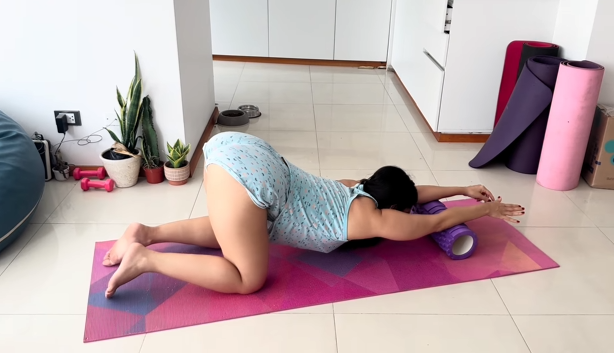
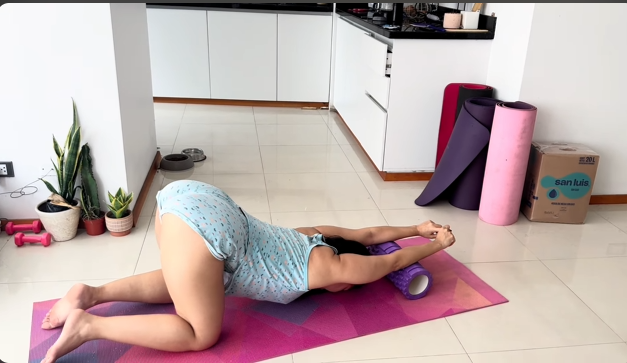
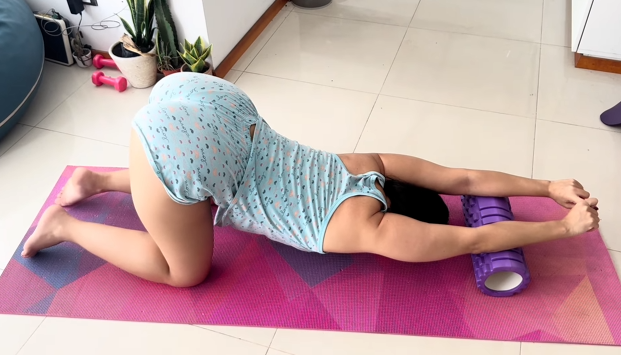
1. Child’s Pose (0:00–1:00)
Begin in a kneeling position.
Bring your big toes together and gently separate your knees wide apart.
Slowly lower your chest toward the ground, reaching your arms forward.
If your forehead doesn’t comfortably touch the floor, place a cushion or folded blanket under your head for support.
This gentle position—often called Child’s Pose—helps release the lower back, stretch the hips, and calm the nervous system.
Allow your body to sink into the support beneath you.
Feel the weight of your torso melting into the mat.
Let your breath guide you.
Inhale slowly through your nose… filling your belly.
Exhale fully… releasing tension from your lower back.
With each breath, imagine space opening in your spine.
Stay here, breathing calmly, for about one minute.
If your mind starts to wander, gently bring your focus back to your breath.
2. Seated Forward Fold (1:00–2:00)
Carefully lift yourself up from Child’s Pose and sit on the mat with your legs extended straight in front of you.
Keep your spine long as you inhale.
As you exhale, slowly hinge forward from your hips, reaching toward your feet.
You don’t need to touch your toes.
This is not about pushing or forcing—it’s about allowing your body to relax into the stretch.
If needed, slightly bend your knees or place a cushion under your knees or torso for comfort.
This position gently stretches the hamstrings and lower back, helping release tension that often contributes to pain.
Let your head and neck relax.
Your arms can rest on your legs, feet, or the floor.
Breathe deeply.
With each exhale, soften a little more.
Imagine your spine lengthening and decompressing.
Hold this position for about one minute.
If you feel any sharp pain, gently come out of the pose and adjust your position.
Remember—this is a deep stretch, not a forceful one.
3. Supine Spinal Twist (2:00–3:00)
Slowly lower yourself onto your back.
Extend your arms out to the sides in a “T” shape.
Bring your knees toward your chest, then gently lower them to one side.
Keep your shoulders relaxed and flat on the ground if possible.
Turn your head in the opposite direction of your knees.
This gentle twist helps release tension in the lower back, spine, and hips while improving mobility and circulation.
If the stretch feels too intense, place a cushion under your knees for support.
Allow gravity to guide you into the pose.
There’s no need to push or deepen the stretch—just relax and let your body open naturally.
Breathe slowly.
Inhale… and feel your ribs expand.
Exhale… and feel your lower back soften into the mat.
Stay here, letting the twist gently unwind your spine.
After a few breaths, slowly return your knees to center and switch sides if you have time.
Even one minute here can make a difference.
Ending the Practice
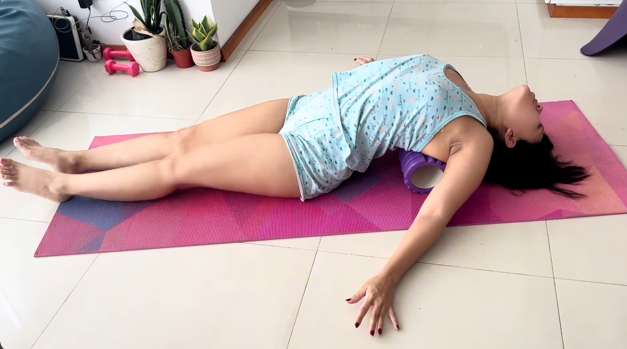
After completing the sequence, return to lying flat on your back.
Close your eyes if they aren’t already closed.
Place one hand on your belly and one on your chest.
Take a few slow, deep breaths.
Feel the rise and fall beneath your hands.
Notice how your body feels now compared to when you started.
Perhaps there is a little more space.
A little more ease.
A little less tension.
This is the power of just three minutes of Yin Yoga.
Final Thoughts
Lower back pain is incredibly common, and it can be caused by many factors—poor posture, long periods of sitting, muscle tightness, or even stress. While this short routine won’t solve everything instantly, it can be a powerful tool to help manage discomfort and support your overall well-being.
Consistency matters more than intensity.
Practicing a short Yin Yoga sequence like this regularly—even just a few minutes a day—can gradually improve flexibility, reduce stiffness, and promote a greater sense of relaxation in both body and mind.
The key is to move slowly, breathe deeply, and listen to your body.
You don’t need to force progress.
You don’t need to rush.
Just take three minutes.
And give your lower back the care it deserves.