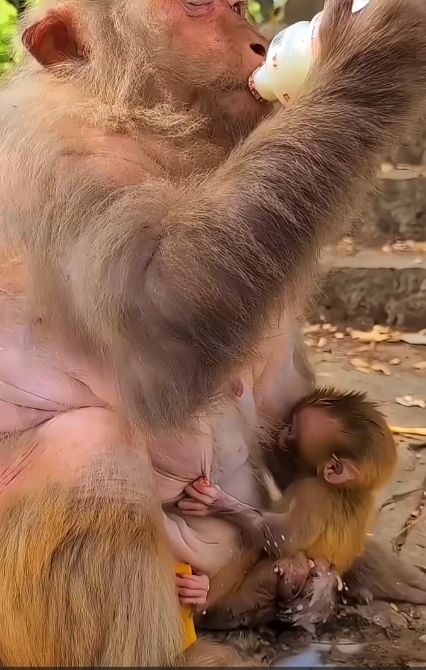
Anyone who has ever spent time observing young animals—or even human toddlers—knows one universal truth: babies can be exhausting. Their energy seems endless, their demands constant, and their emotions intense. One moment they’re calm and curious, the next they’re crying, clinging, or throwing what can only be described as a full-blown tantrum. Watching it all unfold, it’s easy to think, “Wow… I can see why mothers abandon them sometimes. This would drive me nuts!”
It’s an honest reaction, even if it sounds a bit harsh at first.
In the wild, young animals depend heavily on their mothers. Whether it’s a baby monkey clinging tightly to her fur, a cub whining for attention, or a small creature refusing to be left alone for even a second, the pressure on the mother is constant. There are no breaks, no quiet moments, no shared responsibilities in many cases. Just an ongoing cycle of feeding, protecting, carrying, and responding.
And then come the tantrums.
For baby monkeys especially, tantrums can be surprisingly dramatic. They screech, flail, grab, and refuse to let go. If they don’t get what they want—whether it’s milk, attention, or simply being carried—they make their frustration known loudly and persistently. It’s not just occasional; it can happen over and over throughout the day.
From a human perspective, it’s easy to interpret this as “bad behavior” or stubbornness. But in reality, these tantrums are a form of communication. Babies don’t yet have the ability to regulate their emotions or understand boundaries. Everything they feel is immediate and overwhelming. Hunger, fear, discomfort, or even boredom can trigger a reaction that seems disproportionate—but to them, it’s completely natural.
Still, natural doesn’t mean easy.
Imagine being a mother in the wild. You’re constantly alert to danger—predators, environmental threats, competition for food. At the same time, you have a baby clinging to you, demanding attention, making noise that could attract unwanted attention. Your body is tired, your energy limited, and yet the baby doesn’t understand any of that. It just wants what it wants, when it wants it.
In that context, the thought—“This would drive me nuts”—starts to feel very real.
This is where the idea of abandonment comes into the conversation. In some species, under extreme conditions, mothers may indeed leave their offspring behind. But this is rarely about frustration or annoyance. It’s usually a matter of survival. If resources are scarce, if the mother is injured, or if caring for the baby would put both of them at risk, she may make a difficult, instinct-driven decision.
It’s not emotional in the way humans experience it—it’s biological, shaped by the need to ensure that at least some individuals survive.
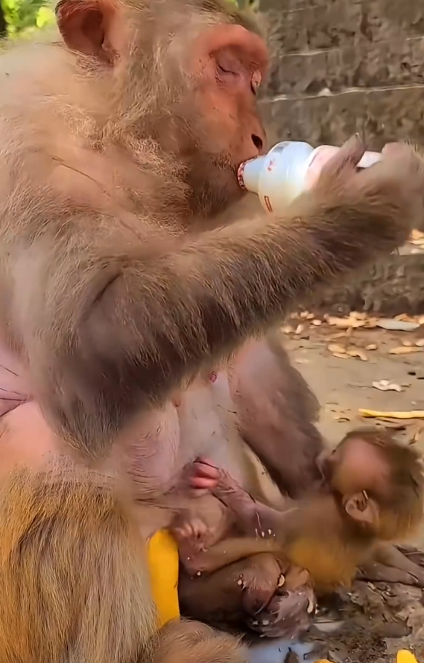
That said, what might look like “abandonment” isn’t always what it seems. In many cases, a mother may temporarily distance herself to encourage independence. She might ignore certain cries, refuse to respond immediately, or move away when the baby becomes overly demanding. To an observer, this can look like rejection. But in reality, it’s often part of the learning process.
The baby begins to understand limits.
Those “little tantrums” play a role here. Each time the baby cries and doesn’t immediately get what it wants, it learns something about the world. It learns patience, resilience, and eventually, self-reliance. These lessons are essential for survival. A baby that never learns to cope with frustration would struggle once it becomes more independent.
So while the tantrums are exhausting, they are also necessary.
From a human perspective, it’s interesting how relatable this dynamic is. Anyone who has cared for a young child knows the feeling of being overwhelmed by constant demands. The repetition, the noise, the unpredictability—it can test even the most patient person. The thought of wanting a break, of feeling pushed to the limit, is something many people can understand.
But just like in the animal world, these moments are part of development.
Children, like baby animals, are learning how to navigate their emotions and their environment. They don’t yet have the tools to express themselves calmly or to understand why they can’t always get what they want. So they react in the only way they know how—with intensity.
And yes, it can be a lot.
The key difference lies in how the situation is handled. Humans have the ability to reflect, to empathize, and to make conscious choices about how to respond. While the instinct to feel overwhelmed is natural, there’s also the capacity to recognize that these behaviors are temporary, part of a larger process of growth.
In the wild, mothers rely on instinct and experience. They balance care with distance, attention with discipline. They don’t respond to every cry, but they also don’t abandon their young without reason. Their actions are guided by what will give their offspring the best chance of survival.
And often, that includes enduring those constant, exhausting tantrums.
What’s remarkable is how resilient these mothers are. Despite the noise, the demands, and the challenges, they continue to care for their young. They adapt, they persevere, and they teach—sometimes gently, sometimes firmly.
The baby, in turn, grows stronger.
Over time, the tantrums become less frequent. The baby learns to climb on its own, to find food, to interact with others. The intense dependency fades, replaced by increasing independence. And one day, the very behaviors that once seemed so overwhelming are gone.
Looking back, those chaotic early days become just one phase in a much larger journey.
So when we say, “I can see why mothers abandon them sometimes,” it’s less about judgment and more about acknowledging how demanding the role of a caregiver can be. It’s a moment of empathy, a recognition of the pressure and the effort involved.
But it’s also important to see the other side.
Because despite everything—the tantrums, the exhaustion, the constant demands—most mothers, whether human or animal, don’t walk away. They stay. They endure. They guide their young through the difficult early stages of life.
And in doing so, they show a kind of strength that goes far beyond patience.
They show commitment.
Because in the end, those “little tantrums” aren’t just chaos—they’re part of growing up.