There’s a certain kind of fatigue that settles deep into your legs after a long day.
Maybe it comes from standing for hours, walking endlessly, working out intensely, or simply carrying the weight of your routine without rest. It’s not just soreness—it’s heaviness. Tight muscles, stiff joints, and that dull ache that makes even simple movement feel like effort.
When your legs feel like this, what they truly need isn’t more activity.
They need release.
They need deep, intentional stretching.
Deep stretches aren’t just about flexibility—they’re about restoring balance. They help lengthen muscles, improve circulation, and bring relief to areas that have been overworked or ignored.
And most importantly, they give your body permission to slow down.
Let’s begin.
Start by finding a quiet space where you can sit or lie down comfortably. Take a deep breath in, and as you exhale, allow your shoulders to relax. Let your mind settle for a moment before you move.
Your body responds better when it feels safe and calm.
1. Seated Forward Fold
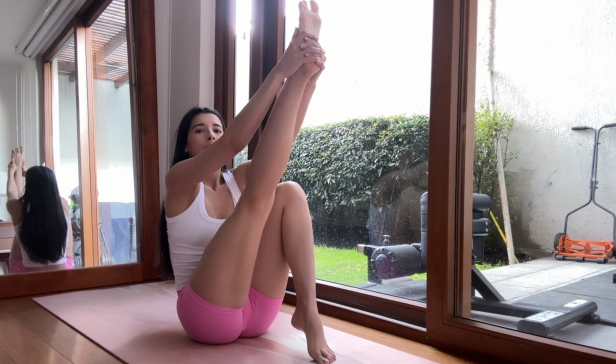
Sit on the floor with your legs extended straight in front of you. Keep your spine long as you slowly hinge forward from your hips, reaching toward your feet.
Don’t force it.
Let gravity guide you.
genui{“math_block_widget_always_prefetch_v2”:{“content”:”y=mx+b”}}
(Think of your body forming a gentle slope rather than collapsing forward.)
You may feel the stretch along your hamstrings and calves. Hold this position for 20–30 seconds, breathing deeply. With each exhale, allow your body to soften a little more.
This stretch helps release tight hamstrings, which often contribute to lower back discomfort and leg fatigue.
2. Standing Quad Stretch
Stand tall and gently pull one foot toward your glutes, holding your ankle behind you. Keep your knees close together and your hips aligned.
If you feel unsteady, hold onto a wall or chair for balance.
You’ll feel this stretch along the front of your thigh—the quadriceps. These muscles work hard throughout the day, especially if you walk or stand a lot.
Hold for 20–30 seconds on each side.
Let your breath stay steady.
3. Deep Lunge Stretch
Step one foot forward into a lunge position, lowering your back knee to the ground. Place your hands on your front knee and gently press your hips forward.
This stretch targets the hip flexors and upper thighs—areas that often become tight from sitting for long periods.
If you want a deeper stretch, raise your arms overhead and slightly arch your back.
Stay here for several breaths.
Feel the tension slowly melt away.
4. Reclining Hamstring Stretch
Lie on your back and lift one leg toward the ceiling. Hold behind your thigh or calf, keeping your leg as straight as possible.
The goal isn’t to force your leg higher—it’s to feel a comfortable stretch.
Your other leg can stay bent or extended on the floor.
Hold for 20–30 seconds, then switch sides.
This stretch is especially helpful for improving flexibility and relieving tightness after long periods of inactivity or exercise.
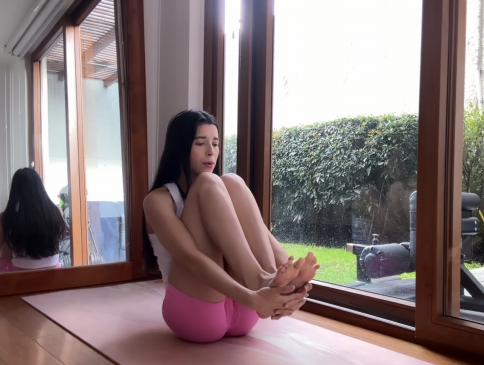
5. Butterfly Stretch
Sit with the soles of your feet together and your knees falling outward. Hold your feet and gently press your knees toward the ground.
Keep your back straight.
You should feel a stretch in your inner thighs and hips.
If you want to deepen the stretch, lean forward slightly—but again, without forcing.
Hold for 30 seconds or longer.
Let your breath guide the movement.
6. Calf Stretch Against Wall
Stand facing a wall and place your hands against it. Step one foot back, keeping your heel pressed firmly into the ground.
Bend your front knee and lean forward slightly.
You’ll feel the stretch along the back of your lower leg.
Calves often get overlooked, but they carry a lot of tension, especially if you walk, run, or stand for long periods.
Hold for 20–30 seconds on each side.
7. Legs Up the Wall
This is less of a stretch and more of a restorative pose—but it’s incredibly effective.
Lie on your back and extend your legs up against a wall. Let your arms rest by your sides, palms facing upward.
Close your eyes.
Stay here for 5–10 minutes.
This position helps reduce swelling, improve circulation, and relieve pressure from tired legs. It’s one of the simplest and most powerful ways to recover after a long day.
As you move through these stretches, remember something important:
This isn’t about pushing your limits.
It’s about listening to your body.
Deep stretching works best when you’re patient. When you breathe into the discomfort instead of resisting it. When you allow your muscles to release naturally, rather than forcing them to change.
Over time, these small moments of care add up.
Your legs will feel lighter.
More flexible.
More supported.
And perhaps even more connected to the rest of your body.
Because your legs do so much for you.
They carry you through your day.
They support your movement, your balance, your strength.
Taking time to care for them isn’t a luxury—it’s a necessity.
So the next time your legs feel tired, don’t ignore it.
Pause.
Stretch.
Breathe.
And give your body the recovery it truly deserves.