There is something powerful about opening the front of your body.
In a world where we spend so much time hunched forward—over phones, laptops, and daily stress—our posture naturally collapses inward. Shoulders round, the chest tightens, and the spine stiffens. Over time, this not only affects how we move, but also how we breathe and feel.
That’s where a yoga backbend stretch routine becomes essential.
Backbends are not just about flexibility or looking graceful. They are about restoring balance to the body, strengthening the spine, and creating space where tension once lived. When practiced mindfully, backbends can energize your entire system, improve posture, and even boost your mood.
This routine is designed for all levels, focusing on gentle progression, safety, and awareness.
Before you begin, find a comfortable space where you can move freely. A yoga mat is helpful, but not required. Wear clothing that allows you to stretch without restriction. Most importantly, approach this routine with patience—your body will open in its own time.
Start in a seated or standing position and take a few deep breaths. Inhale through your nose, expanding your chest, and exhale slowly through your mouth. Let your body relax and prepare for movement.
The first step is warming up the spine.
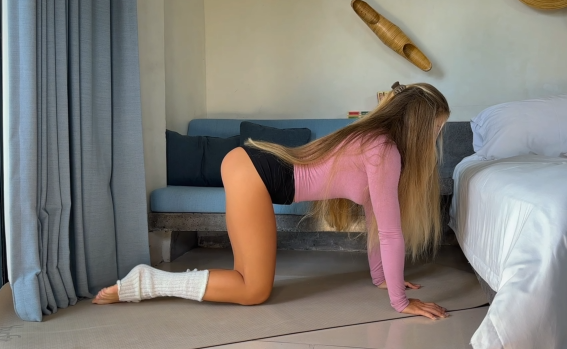
Come onto your hands and knees for a gentle spinal flow. As you inhale, drop your belly slightly and lift your chest forward, allowing your back to arch naturally. As you exhale, round your spine, drawing your chin toward your chest. Move slowly between these two positions, letting your breath guide the rhythm.
This movement awakens your spine and prepares it for deeper extension.
After several rounds, shift into a low cobra pose. Lie flat on your stomach with your hands placed under your shoulders. Press lightly into your palms and lift your chest just a few inches off the ground. Keep your elbows bent and close to your body. The focus here is not height, but length—imagine your chest reaching forward rather than simply lifting up.
Hold for a few breaths, then gently lower down.
Repeat this movement a few times, gradually increasing the lift if it feels comfortable.
Next, move into a sphinx pose. Rest on your forearms with your elbows under your shoulders, lifting your chest while keeping your hips grounded. This pose provides a gentle backbend that supports the lower back while opening the chest.
Breathe deeply here, allowing your spine to settle into the stretch.
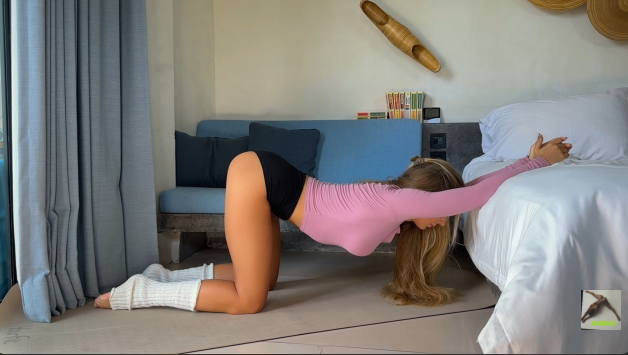
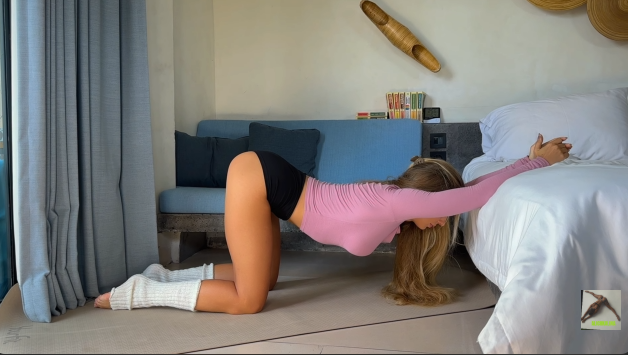
From here, push back into child’s pose to neutralize the spine. Bring your hips toward your heels and rest your forehead on the mat. This balance between extension and relaxation is important—it keeps your practice safe and sustainable.
Now, transition into a kneeling position for a deeper backbend.
Camel pose is a key posture in this routine. Start by kneeling with your knees hip-width apart. Place your hands on your lower back for support. Slowly begin to lift your chest upward, opening your heart toward the ceiling. If it feels comfortable, reach your hands back toward your heels.
Keep your movement controlled and your breath steady.
Avoid dropping your head back too quickly. Instead, focus on lifting through your chest and supporting your lower back. Hold the pose for a few breaths, then slowly come back up, leading with your chest rather than your head.
Rest again in child’s pose.
As your body warms and opens, you can explore a more active backbend.
Bridge pose is a great next step. Lie on your back with your knees bent and feet flat on the floor, hip-width apart. Press into your feet and lift your hips upward, creating a gentle arch in your spine. Interlace your fingers beneath your back if possible, pressing your arms into the mat to lift your chest higher.
This pose strengthens the back while opening the front body.
Hold for several breaths, then lower down slowly.
Repeat once or twice, noticing how your body responds each time.
For those who feel ready, you can progress to a deeper backbend such as wheel pose. Place your hands beside your ears, fingers pointing toward your shoulders. Press firmly into your hands and feet as you lift your body into an arch.
This is an advanced movement, so only attempt it if your body feels prepared.
Even lifting halfway or holding a supported bridge is perfectly beneficial. There is no need to rush into deeper poses.
Throughout this routine, the most important element is awareness.
Backbends should feel expansive, not painful. If you feel compression in your lower back, ease out of the pose and adjust your alignment. Engage your core gently to support your spine, and keep your breath steady and calm.
After completing your backbends, it’s essential to bring the spine back to neutral.

Return to child’s pose once more, allowing your back to relax. Then move into a gentle seated forward fold, reaching toward your legs and letting your spine round naturally. This counterpose helps release any tension created during the backbends.
Finish by lying flat on your back.
Let your arms rest by your sides, palms facing up. Close your eyes and take a few slow, deep breaths. Notice the sensations in your body—the openness in your chest, the warmth in your spine, the calmness in your breath.
This is where the benefits settle in.
A yoga backbend stretch routine is not about forcing your body into extreme shapes. It’s about creating space, building strength, and reconnecting with your natural posture. Over time, with consistent practice, you may notice improved flexibility, reduced stiffness, and a greater sense of energy throughout your day.
Perhaps most importantly, backbends invite you to open—not just physically, but emotionally as well. There is a vulnerability in lifting your chest, in exposing the front of your body, in moving against the привычка of closing in.
And in that openness, there is strength.
So take your time.
Move gently.
Breathe deeply.
And let your body open, one stretch at a time.