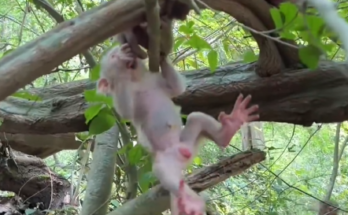
In the dappled shade of a sprawling forest, where vines twisted around ancient trees and the sounds of life echoed endlessly, a young monkey named Taro was learning a lesson he didn’t quite understand—and didn’t want to accept.
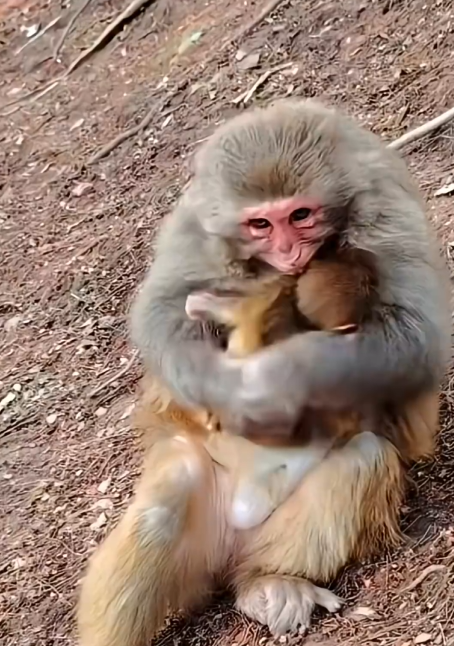
For weeks, maybe months, his world had been simple. Whenever he felt hungry, scared, or even just bored, he would cling to his mother and nurse. It was comforting, warm, and familiar. It was the first thing he had ever known, and in his mind, it was something that would always be there.
But things were beginning to change.
At first, it was subtle. When Taro tried to nurse, his mother would shift slightly, moving just enough to make it difficult. Sometimes she would gently push him away, her hand firm but not forceful. Taro didn’t understand. He would chirp in confusion, tugging at her, trying again.
Then came the nips.
They were quick, light, and unexpected. Each time Taro insisted on nursing, his mother would turn and give a small nip—not enough to injure, not enough to cause real pain, but enough to surprise him. Enough to make him pause.
To Taro, it felt like rejection.
He didn’t understand why the one who had always comforted him was suddenly refusing him. His tiny mind struggled to make sense of it. Had he done something wrong? Was she angry with him?
From a distance, another older monkey watched the interaction. She had seen this many times before. She knew what was happening, even if Taro didn’t.
“She is weaning him,” the older monkey seemed to say through her calm observation. “If she was hurting him, she would be doing more than just nipping at him.”
Taro, however, wasn’t thinking in such terms. All he knew was that the comfort he depended on was slowly being taken away.
One afternoon, driven by hunger and habit, he tried again. He clung tightly to his mother, reaching for what had always been his source of security. This time, she turned quickly and gave a slightly firmer nip. Taro squeaked in surprise and pulled back, his eyes wide.
He sat there, confused and a little hurt—not physically, but emotionally.
His mother looked at him, her expression steady. There was no anger in her gaze, no cruelty. Instead, there was something deeper—something firm, but caring.
She wasn’t rejecting him.
She was teaching him.
Still, Taro didn’t understand that yet.
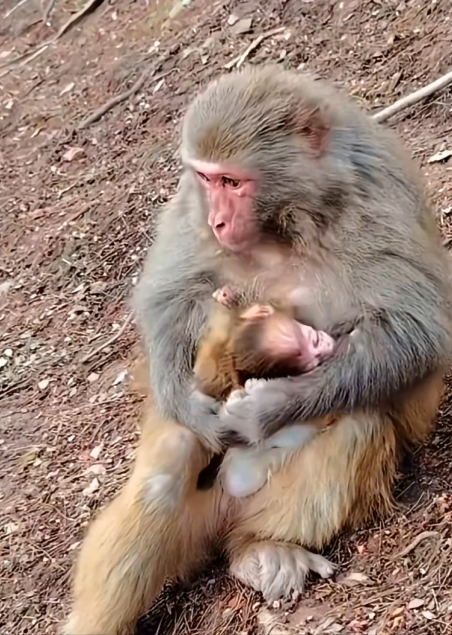
He wandered a short distance away, watching her from a nearby branch. Other young monkeys his age were already exploring more, picking fruits, chewing leaves, and learning to forage. Taro had always stayed close to his mother, relying on her for everything.
Now, he felt unsure.
His stomach growled softly. He glanced back at his mother, hoping she would call him back, allow him to return to the comfort he knew. But she didn’t. Instead, she began to forage, picking fruits and eating them calmly.
Taro hesitated, then looked around.
The forest was full of options, just as his mother had shown him before. Fruits hung from branches, leaves rustled in the breeze, and insects moved quietly beneath bark. All the lessons she had been teaching him—lessons he hadn’t fully taken seriously—suddenly mattered.
Slowly, he moved toward a nearby branch with small, colorful fruits. He reached out, uncertain, and picked one. He sniffed it, remembering how his mother had demonstrated this many times.
He took a small bite.
It wasn’t the same as nursing, but it was good. Sweet. Real.
Taro blinked in surprise, then took another bite.
From across the branch, his mother watched him. She didn’t interfere. She didn’t rush to him. She simply observed, allowing him the space to learn.
Later, when Taro returned to her, he tried once more out of habit. This time, the nip came quickly again. But something had changed.
Instead of feeling rejected, he paused.
The memory of the fruit lingered. The small sense of independence began to grow.
Over the next few days, the pattern continued. Each attempt to nurse was met with a gentle but firm refusal—sometimes a push, sometimes a nip. But alongside that, Taro found himself exploring more. He tried different foods, climbed farther, and spent short periods away from his mother.
The nips didn’t mean harm.
They meant it was time.
One evening, as the golden light of the setting sun filtered through the trees, Taro sat beside his mother without trying to nurse. Instead, he held a piece of fruit in his hands, chewing thoughtfully.
She groomed him gently, just as she always had. That hadn’t changed.
He leaned into her, feeling the same warmth and safety—but now, there was something new alongside it.
Understanding.
He realized that she hadn’t pushed him away because she didn’t love him. She had done it because she did.
If she wanted to hurt him, she could have. She was stronger, faster, and more experienced. But she never did more than what was necessary. The nips were not acts of aggression—they were signals, boundaries, lessons.
They were her way of saying, “You are ready.”
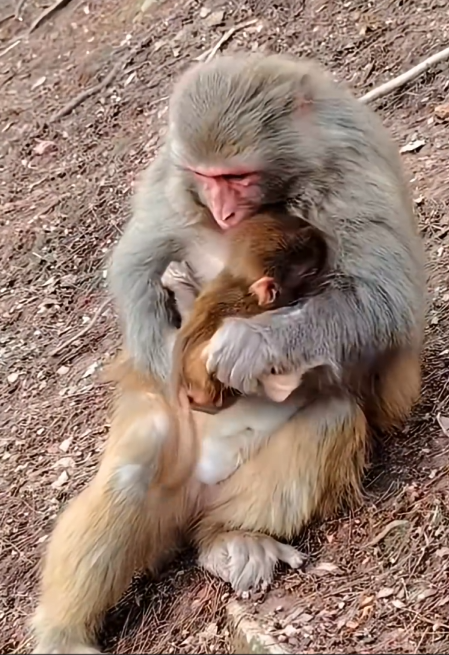
And slowly, Taro began to believe it.
Days turned into weeks, and the need to nurse faded. Not completely at first, but enough. Taro grew more confident, more capable. He could find food, climb with ease, and navigate the forest with growing independence.
Yet, he never strayed too far.
Because even as he grew, he knew that his mother was still there—not as the sole source of everything, but as a guide, a protector, and a constant presence in his life.
One day, as he watched a younger monkey cling tightly to its own mother, trying to nurse and being gently nipped away, Taro paused.
He understood now.
He didn’t see cruelty.
He saw care.
He saw the quiet strength it took to push someone toward independence, even when it might cause momentary confusion or discomfort.
And as he sat beside his mother, no longer needing to nurse but still choosing to stay close, he felt something deeper than before.
Not just comfort.
But respect.
Because love, he had learned, wasn’t just about holding on.
Sometimes, it was about letting go—just enough to help someone grow.