Three months is a long time.
For people, it passes in meetings, routines, and quiet nights that blur together. But for a dog, three months feels like forever—a stretch of days filled with waiting, wondering, and remembering.
Max didn’t understand time the way humans did. He didn’t count days or mark calendars. But he understood absence. He understood the silence where a voice used to be, the empty space by the door where footsteps once echoed, the scent that slowly faded but never truly disappeared.
His owner, Daniel, had been everything.
From the moment Max was a small, clumsy puppy, Daniel had been there—teaching him, feeding him, laughing with him. Morning walks, evening runs, lazy afternoons on the couch… those moments were Max’s entire world. Daniel wasn’t just his owner.
He was his home.
So when Daniel suddenly disappeared, Max didn’t understand.
One day, the house was full of life. The next, it was quiet.
At first, Max waited by the door, ears perked, tail ready. Every passing sound made him jump up, hoping—believing—that it was Daniel coming back. But the door never opened.
Days passed.
Then weeks.
Max stopped running to the door. He stopped wagging his tail at every noise. But he didn’t stop waiting. Not really. He just… waited differently.
He stayed close to Daniel’s room, often curling up beside the bed where his scent still lingered faintly. Sometimes, he would press his nose against Daniel’s old jacket, breathing in deeply, as if trying to hold onto something that was slipping away.
The family tried their best.
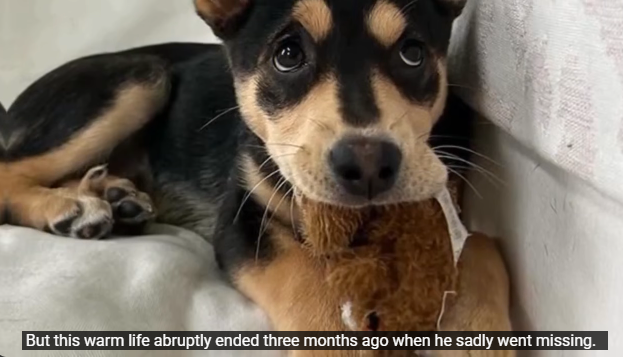
Daniel’s parents fed Max, walked him, spoke to him gently. They loved him in their own way. But Max knew the difference. There was a bond that couldn’t be replaced.
And still, he waited.
What Max didn’t know was that Daniel hadn’t left by choice.
A sudden accident had taken him far away—to a hospital in another city. Recovery was long and difficult. There were surgeries, therapy sessions, and days when even speaking felt like too much.
But through it all, Daniel thought of Max.
He remembered the way Max would greet him every morning, tail wagging like it might never stop. He remembered the warmth of having him nearby, always loyal, always present.
And he promised himself one thing:
“I’ll go back to him.”
Three months later, he finally could.
The day Daniel returned was quiet at first.
A car pulled into the driveway. The engine stopped. The front door opened.
Inside, Max lay in his usual spot near the hallway. He didn’t rush to the door like he used to. He had learned not to hope too quickly.
But then—
A sound.
A voice.
“We’re home,” someone said softly.
Max’s ears twitched.
That voice…
It was faint. Weaker than before. But it was there.
Max slowly lifted his head.
His heart began to pound.
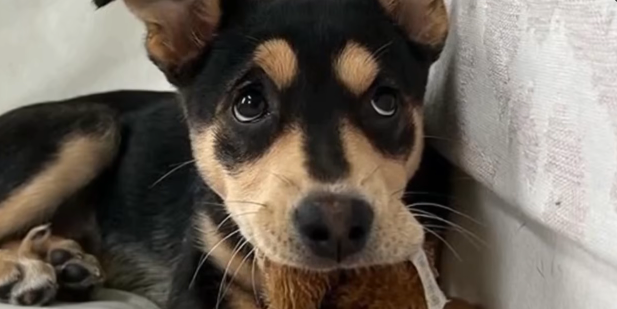
No.
It couldn’t be.
He stood up, his legs slightly shaky, and took a cautious step forward. Then another.
The scent hit him next.
Familiar. Faded. But unmistakable.
Max froze.
At the doorway stood Daniel, thinner than before, leaning slightly on a crutch. His face showed signs of everything he had been through—but his eyes were the same.
And they were looking right at Max.
For a moment, everything stood still.
Max didn’t bark.
He didn’t run.
He just stared.
As if his mind was trying to catch up with what his heart already knew.
“Max…” Daniel whispered.
That was all it took.
In an instant, Max exploded into motion.
He ran.
Not carefully. Not cautiously. But with everything he had left inside him. His paws skidded against the floor as he rushed forward, his body trembling with emotion.
When he reached Daniel, he didn’t stop.
He jumped—gently at first, then more urgently—his tail wagging wildly, his whole body shaking. Soft whines escaped him, turning into cries, as if he couldn’t decide whether to laugh or sob.
Daniel dropped his crutch.
“Hey—hey, easy!” he laughed, his voice breaking.
Max pressed against him, licking his face, his hands, anywhere he could reach. It was overwhelming, unstoppable. Months of waiting, of missing, of silent longing—all pouring out at once.
“I’m here,” Daniel said, wrapping his arms around him. “I’m here, buddy.”
Max pulled back for just a second, staring into Daniel’s face as if to confirm it was real.
Then he did something no one expected.
He gently placed his head against Daniel’s chest.
And he stayed there.
Completely still.
The room went quiet.
Max wasn’t excited anymore. He wasn’t jumping or crying.
He was listening.
Listening to the heartbeat he remembered so well.
And when he heard it—steady, alive, real—his body finally relaxed.
A soft sigh escaped him.
Daniel’s eyes filled with tears.
“You waited for me, didn’t you?” he whispered.
Max didn’t move.
He didn’t need to.
In that moment, everything was understood.
But what happened next… no one could have predicted.
Over the following days, something incredible began to unfold.
Max wouldn’t leave Daniel’s side.
Not for a second.
At first, it seemed like simple attachment. But soon, it became clear—it was something more.
Daniel struggled with his recovery. Walking was painful. Balance was difficult. Some days, even standing felt like a challenge.
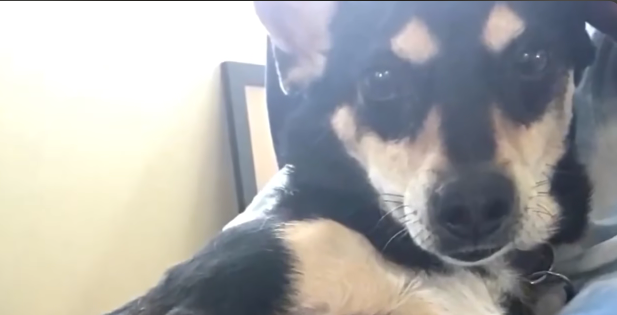
But Max… adapted.
Without being taught, without being trained, Max began to help.
When Daniel stood up, Max would position himself beside him, steady and strong. When Daniel walked, Max matched his pace perfectly, never pulling, never lagging behind.
If Daniel stumbled, Max was there.
If Daniel hesitated, Max nudged him forward.
It was as if, during those three months apart, something had changed in Max—not just his longing, but his purpose.
One afternoon, as Daniel carefully made his way across the living room, he lost his balance.
Before anyone could react, Max moved.
He pressed his body firmly against Daniel’s leg, stabilizing him just enough to keep him from falling.
Daniel froze.
Then slowly looked down.
Max looked back up at him.
Calm. Focused. Certain.
“You’re helping me,” Daniel said softly.
His mother, watching from across the room, covered her mouth in shock.
They hadn’t trained him to do this.
No one had shown him how.
He just… knew.
From that day on, Max became more than a companion.
He became a partner in healing.
Every step Daniel took, Max was there. Every struggle, every small victory—shared.
And as weeks passed, Daniel grew stronger.
But he never walked alone.
Because the dog who had waited for him, who had recognized him after months apart, had done more than just remember.
He had chosen.
Chosen to stay. To help. To love in a way that went beyond instinct.
And in the end, what happened wasn’t just unbelievable.
It was unforgettable.
Because sometimes, the bond between a human and a dog isn’t just about loyalty.
It’s about understanding.
It’s about connection.
And sometimes… it’s about saving each other.