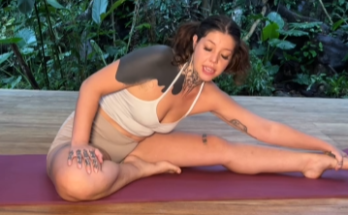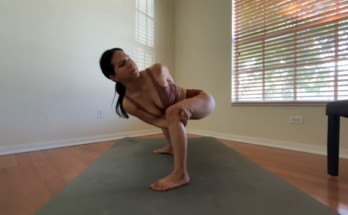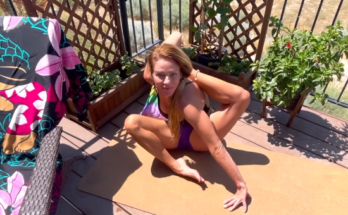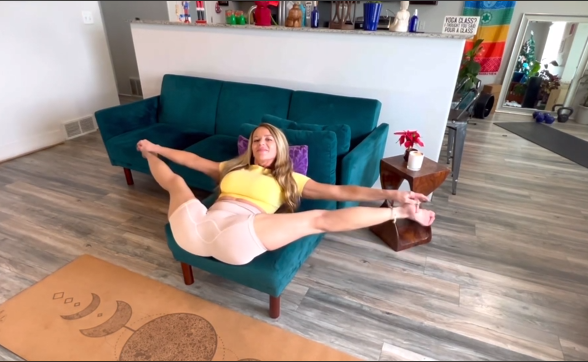
Flexibility at its highest level is a blend of strength, patience, and artistry. In this yoga-inspired workout, Penelope demonstrates how stretching evolves into contortion—where the body moves beyond basic limits into controlled, extreme flexibility. But behind every dramatic oversplit or deep backbend lies a foundation built on discipline and mindful practice.
This is not just a workout. It is a journey into understanding your body, respecting its boundaries, and gradually expanding them.
The Philosophy Behind Penelope’s Practice
Penelope’s approach combines elements of yoga, gymnastics, and contortion. Unlike rushed or forceful stretching, her method focuses on breath, alignment, and control. She often reminds her students: “Extreme flexibility is not about pushing harder—it’s about going deeper with awareness.”
This mindset is what separates safe progress from injury. Every movement has intention. Every stretch has purpose.
Warming Up: Preparing for Depth
Before attempting any extreme flexibility work, the body must be properly warmed up. Penelope begins with 10 minutes of light cardio—jumping, dynamic lunges, and arm circles—to activate the muscles.
From there, she transitions into dynamic stretches:
- Leg swings (front-to-back and side-to-side)
- Hip circles
- Gentle spinal waves
These movements prepare the joints and muscles for deeper work, reducing the risk of strain. You should feel warm, mobile, and ready—not fatigued.
Deep Hamstring Work
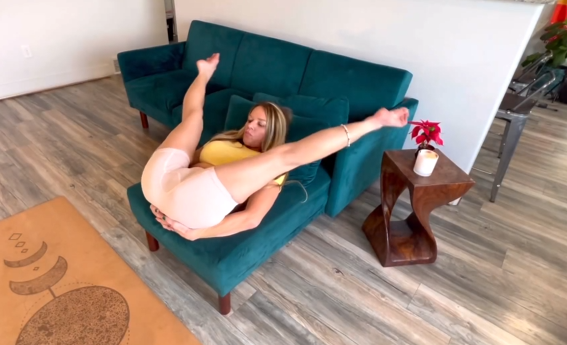
Hamstrings play a critical role in splits and oversplits. Penelope emphasizes slow, controlled stretching rather than bouncing or forcing.
Start in a seated forward fold:
- Keep your spine long
- Engage your quadriceps
- Reach toward your toes without collapsing your chest
Hold for 30–60 seconds, breathing deeply. With each exhale, allow your muscles to release tension.
Next, move into standing forward folds and elevated stretches using blocks or a low surface. This begins to simulate the angle required for oversplits.
Entering the Split
Once the hamstrings are warmed, transition into a front split.
Use your hands for support and slide slowly into position. Stop at the point of resistance—not pain. Penelope stresses that discomfort is normal, but sharp pain is a signal to stop.
Hold the split and focus on alignment:
- Hips squared forward
- Back leg extended fully
- Core engaged
Over time, your body will begin to open naturally.
Oversplits: Beyond the Floor
Oversplits take the traditional split one step further by elevating the front or back leg. This creates a deeper stretch in the hamstrings and hip flexors.
Penelope uses yoga blocks or cushions under the front leg:
- Start with a low height
- Gradually increase as flexibility improves
The key is control. Never drop into an oversplit. Always ease into it slowly, allowing your muscles to adapt.
This is where extreme flexibility begins—but it must always be approached with caution and patience.
Backbends and Spine Work
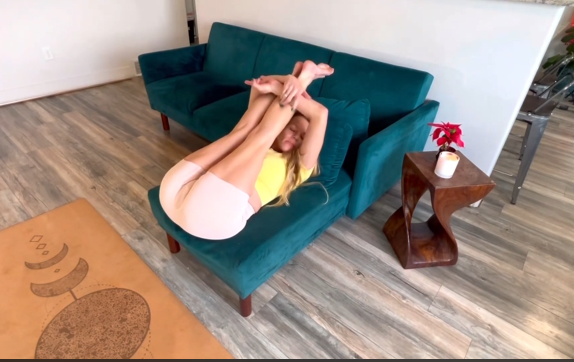
Contortion is often defined by the ability to bend the spine deeply and safely. Penelope incorporates yoga-inspired backbends to build this flexibility.
Start with:
- Cobra pose for gentle spinal extension
- Bridge pose for strength and openness
As you progress, move into deeper variations:
- Wheel pose (full bridge)
- Forearm bridges
- Standing backbends
Each movement should be supported by strong arms, legs, and core muscles. Flexibility without strength can lead to injury.
Penelope’s backbend flow often transitions smoothly from the floor to standing positions, creating a graceful sequence that blends strength with fluidity.
Shoulder and Chest Opening
Extreme flexibility requires open shoulders and a flexible upper body.
Penelope includes:
- Wall-assisted shoulder stretches
- Chest-opening poses with clasped hands
- Deep lunges with arm extensions
These movements improve posture and prepare the body for advanced contortion shapes.
Combining Yoga and Contortion Flow
One of the most beautiful aspects of Penelope’s routine is how she blends yoga flow with contortion elements.
A typical sequence might include:
- A lunge transitioning into a split
- A split moving into an oversplit
- Rising into a backbend
- Flowing into a standing pose
This continuous movement builds not only flexibility but also coordination and grace.
It transforms stretching into a form of expression.
The Role of Breathing
Breathing is essential in every stage of this workout.
Penelope encourages slow, controlled breathing:
- Inhale to prepare
- Exhale to deepen the stretch
This helps the nervous system relax, allowing muscles to release tension more effectively.
Holding your breath creates resistance. Breathing creates space.
Recovery and Balance
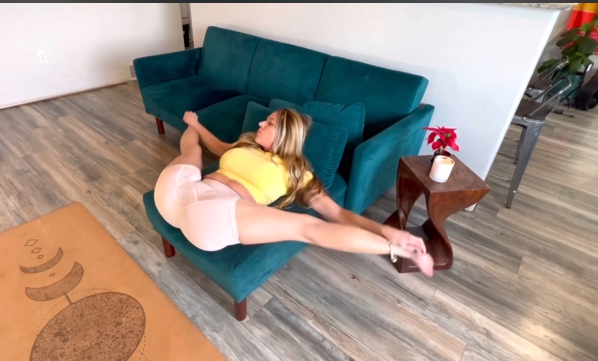
After an intense session, the body needs time to recover.
Penelope finishes with:
- Gentle spinal twists
- Child’s pose
- Light hamstring stretches
Hydration and rest are equally important. Flexibility gains happen during recovery, not just during training.
Progress and Patience
Extreme flexibility is not achieved overnight.
Some days your body will feel open and responsive. Other days, it may feel tight and resistant. This is completely normal.
Progress comes from consistency, not perfection.
Penelope’s journey into contortion took years of dedicated practice. What you see now is the result of countless hours of mindful training.
Final Thoughts
Stretching and contortion are not about extremes for the sake of appearance. They are about discovering what your body is capable of when treated with care and respect.
This yoga-inspired workout offers a pathway into that discovery. Whether you are just beginning or advancing toward oversplits, the principles remain the same:
- Move with intention
- Breathe with awareness
- Progress with patience
Extreme flexibility is not about forcing your body beyond its limits.
It’s about expanding those limits—safely, gradually, and beautifully.
And with guidance like Penelope’s, that journey becomes not just effective, but deeply rewarding.