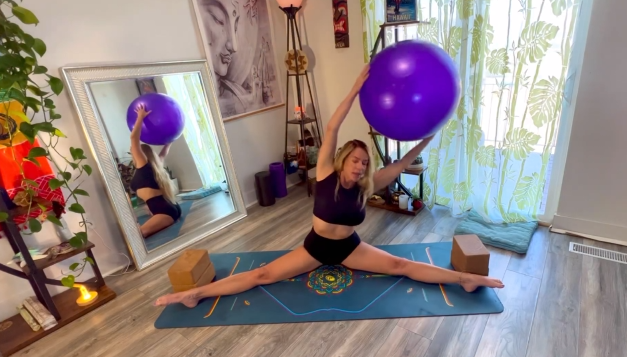
Flexibility training is evolving, and one of the most effective yet underrated tools for improving splits is something simple: a ball. Whether it’s a yoga ball, stability ball, or even a small massage ball, incorporating this piece of equipment into your stretching routine can unlock new levels of mobility. For those exploring contortion, fitness, or gymnastics, using a ball adds both support and challenge, helping you safely deepen your stretches while building strength and control.
The journey to achieving full splits—and eventually oversplits—is not just about pushing your legs farther apart. It’s about developing mobility, which combines flexibility with strength and coordination. A ball introduces instability and assistance at the same time, forcing your muscles to engage while allowing you to explore a deeper range of motion.
Before starting any splits mobility workout, warming up is essential. Spend at least 5–10 minutes increasing your heart rate with light cardio such as jogging, jumping rope, or dynamic movement. Follow this with leg swings, hip rotations, and gentle lunges. The goal is to prepare your muscles and joints, reducing the risk of injury and making your stretches more effective.
Once your body is warm, begin with basic stretches using the ball as support. One of the simplest exercises is the hamstring stretch with a stability ball. Place one leg on top of the ball while standing or kneeling, and slowly roll the ball forward as you straighten your leg. Keep your spine long and your core engaged. This movement gently stretches the hamstrings while allowing you to control the depth by adjusting the ball’s position. Hold the stretch for 30 seconds, then switch sides.
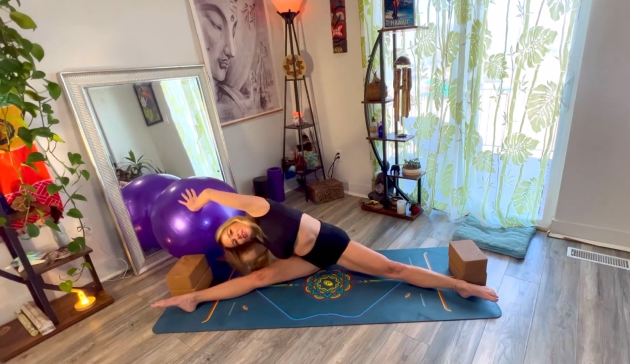
Next, move into a hip opener using the ball. Place your front leg bent in a lunge position, and rest your back thigh or hip lightly against the ball. As you sink into the lunge, the ball supports your weight and helps you maintain balance. This position stretches the hip flexors and inner thighs, which are crucial for achieving splits. You can deepen the stretch by slowly rolling the ball backward, increasing the extension of your back leg.
For a more advanced movement, try assisted front splits with the ball. Position yourself in a split stance and place the ball under your front thigh or hands. As you slowly slide into the split, the ball provides support and reduces pressure on your muscles. This allows you to relax more deeply into the stretch while maintaining control. Focus on keeping your hips square and your posture upright. Hold for 20–30 seconds, breathing deeply.
The ball also allows for dynamic stretching, which is especially useful in gymnastics and contortion training. Instead of holding a static position, gently move in and out of the stretch. For example, in a split position with your hands on the ball, slowly roll forward and backward. This creates a flowing motion that improves mobility and teaches your muscles to adapt to different ranges of movement.
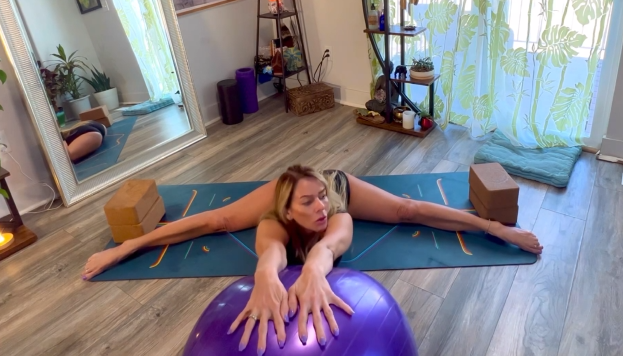
Another powerful exercise is the straddle stretch with the ball. Sit on the floor with your legs spread wide, and place the ball in front of you. Rest your hands or forearms on the ball and slowly roll it forward as you lean into the stretch. This targets your inner thighs and hips, areas that are essential for middle splits. The ball supports your upper body, allowing you to go deeper without straining your back.
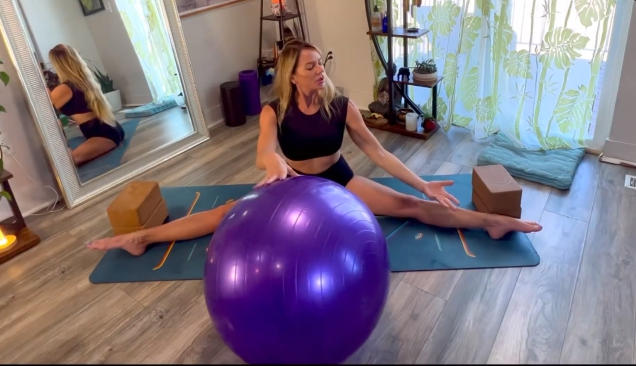
For those interested in contortion-level flexibility, the ball can be used to explore oversplits safely. Place the ball under your front leg while in a split, elevating it slightly. This increases the stretch beyond a flat split. Because the ball is soft and adjustable, it reduces the intensity compared to using a hard surface like a block. However, it still challenges your flexibility and control. Always approach oversplits gradually and listen carefully to your body.
One of the biggest advantages of using a ball is that it encourages active flexibility. In many stretches, it’s easy to become passive, simply relying on gravity. With a ball, you must constantly stabilize yourself, engaging your core and leg muscles. This builds strength in your end range of motion, which is essential for athletes, dancers, and gymnasts who need both flexibility and control.
Breathing remains a key component throughout your workout. Deep, steady breaths help relax your muscles and improve your ability to stretch. Inhale as you prepare, and exhale as you move deeper into the stretch. The combination of breath and movement creates a rhythm that makes your training more effective and enjoyable.
Recovery should not be overlooked. After a session of deep stretching, your muscles may feel tired or slightly sore. Gentle movement, hydration, and proper rest will help your body adapt and grow stronger. Using a massage ball to release tight areas can also be beneficial, especially for the hips and hamstrings.
It’s important to stay patient and consistent. Flexibility gains take time, and progress may feel slow at first. Some days your body will feel more open, while other days it may feel tight. This is completely normal. The key is to keep showing up and putting in the work.
Incorporating a ball into your splits mobility routine adds variety and excitement to your training. It transforms traditional stretching into a more interactive experience, keeping you engaged and motivated. Whether you’re training for gymnastics, improving your fitness, or exploring contortion, this tool can help you reach your goals more efficiently.
Safety should always come first. Never force your body into a position it’s not ready for. There’s a difference between a deep stretch and pain. If something feels wrong, ease out of the position and adjust your technique. Proper alignment and control are far more important than how deep you can go.
In conclusion, splits mobility with a ball is a powerful and versatile approach to flexibility training. It combines the principles of stretching, strength, and balance, making it ideal for anyone looking to improve their range of motion. By using the ball for support and challenge, you can safely explore deeper stretches, build active flexibility, and enhance your overall performance.
Stay consistent, stay mindful, and enjoy the process. With time and dedication, you’ll not only achieve your splits but also develop a stronger, more flexible body capable of incredible movement.