The shelter is never truly quiet.
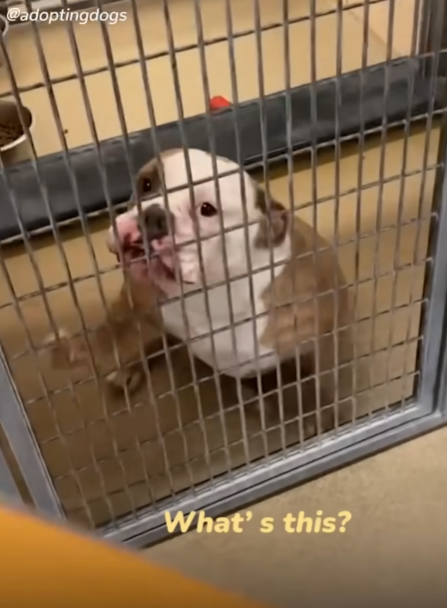
Even in its calmest moments, there’s a soft hum of life—paws shifting on concrete floors, the clinking of metal bowls, the distant echo of barking that rises and falls like waves. For the dogs who live there, time moves differently. Days blur together, marked only by feeding schedules, brief walks, and the hope—always the hope—that someone might stop in front of their kennel and choose them.
Because in a shelter, everything comes down to that one moment.
The moment a door opens.
The moment a life changes.
For some dogs, the reaction begins long before adoption papers are signed. They seem to sense it. A visitor pauses a little longer. Their voice softens. Their hand lingers on the cage just a second more than usual.
And the dog watches.
Carefully.
Take Bella, for example—a medium-sized mixed breed who had been at the shelter for nearly a year. Bella wasn’t the loudest dog, nor the most energetic. She didn’t jump or bark wildly when people passed by. Instead, she sat quietly at the front of her kennel, her tail gently tapping the floor, her eyes following every movement.
Many people walked past her.
Until one day, someone didn’t.
A woman knelt down in front of Bella’s kennel and simply sat there. No sudden movements. No loud excitement. Just presence.
Bella tilted her head.
Her tail wagged a little faster.
The door opened.
At first, Bella didn’t move. It was as if she couldn’t quite believe it. She looked back at the shelter worker, then at the woman, then back again.
“Go on,” the worker said gently.
Bella took one step forward.
Then another.
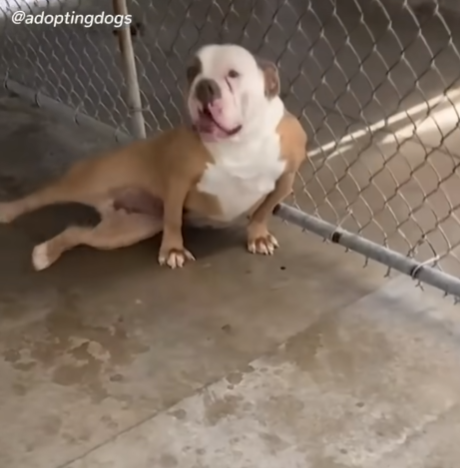
When she finally crossed that threshold, her entire body seemed to change. Her tail wagged harder, her posture lifted, and her eyes—those soft, patient eyes—lit up in a way no one had seen before.
She pressed her body against the woman’s legs, leaning in as if to say, Is this real? Are you really mine?
Some dogs react with quiet disbelief like Bella.
Others explode with joy.
Rocky, a young energetic terrier, had only been in the shelter for a few weeks, but the environment had already begun to wear on him. His bark was loud, his energy restless, his movements frantic. He jumped against the kennel door whenever someone walked by, desperate to be noticed.
Most people found him overwhelming.
But one afternoon, a family stopped.
The kids laughed at his excitement instead of backing away. The parents exchanged a glance—and then nodded.
When the kennel door opened, Rocky didn’t hesitate. He burst forward, tail wagging so fast it was a blur. He spun in circles, jumped up, then down, then ran back and forth as if he couldn’t contain the happiness flooding through him.
“Okay, okay!” one of the kids laughed. “We get it—you’re excited!”
Rocky licked every hand he could reach, his whole body wiggling with pure, unfiltered joy.
For him, adoption wasn’t a quiet moment.
It was a celebration.
Then there are the dogs who are afraid.
Not every reaction is instant happiness. Some dogs have known too much hardship, too much uncertainty. For them, being adopted can feel confusing—even frightening.
Luna was one of those dogs.
She had been rescued from a neglectful situation and spent months learning to trust again. In the shelter, she stayed in the back of her kennel, avoiding eye contact, flinching at sudden movements.
When a man came to adopt her, the staff was hopeful—but cautious.
“This might take time,” they warned.
He nodded. “That’s okay.”
When the door opened, Luna didn’t move.
He didn’t force her.
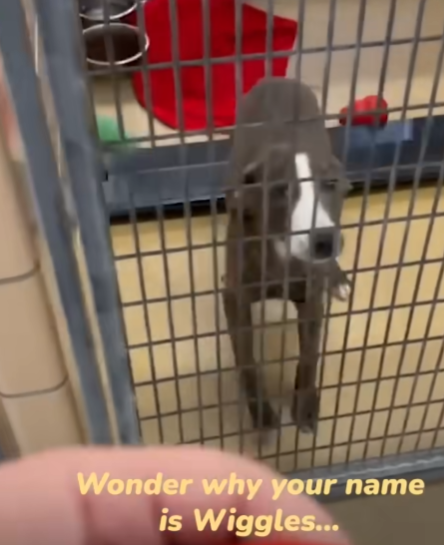
Instead, he sat down on the floor, turning slightly sideways to make himself less intimidating. Minutes passed. Then more.
Finally, Luna took a small step forward.
Then another.
Her body was low to the ground, her tail tucked, her eyes uncertain.
“It’s okay,” he said softly.
When she finally reached him, she didn’t jump or wag wildly. She simply stood there, trembling.
He extended his hand slowly.
She sniffed it.
And then, in a moment so quiet it could have been missed, she leaned in.
Just a little.
But it was everything.
Adoption, for Luna, wasn’t loud or fast.
It was the beginning of trust.
There are also the dogs who seem to understand everything.
They know.
They feel it.
And when their moment comes, their reaction is something unforgettable.
Max, an older dog with graying fur and tired eyes, had been overlooked for months. People often chose younger dogs, more energetic companions. Max would watch them leave, his gaze following each one until the door closed.
But he never lost hope.
The day his person came, something shifted.
The man walked slowly through the shelter, stopping at each kennel, but when he reached Max, he paused.
Their eyes met.
Max stood up.
Not quickly, not frantically—just calmly.
The shelter worker opened the door.
Max walked out with quiet dignity, his tail wagging gently.
He didn’t jump.
He didn’t bark.
He simply walked straight to the man and sat beside him, as if he had been waiting all along.
The man knelt down, placing a hand on Max’s head.
“There you are,” he said softly.
Max leaned into him, closing his eyes.
It was as if he knew.
As if he had been waiting for that exact moment, that exact person.
Around them, the shelter continued its usual rhythm—barking, movement, noise.
But for Max, everything had changed.
And then there are the moments that bring everyone to tears.
When a dog who has been waiting the longest finally gets their chance.
When the shy one finds courage.
When the broken one begins to heal.
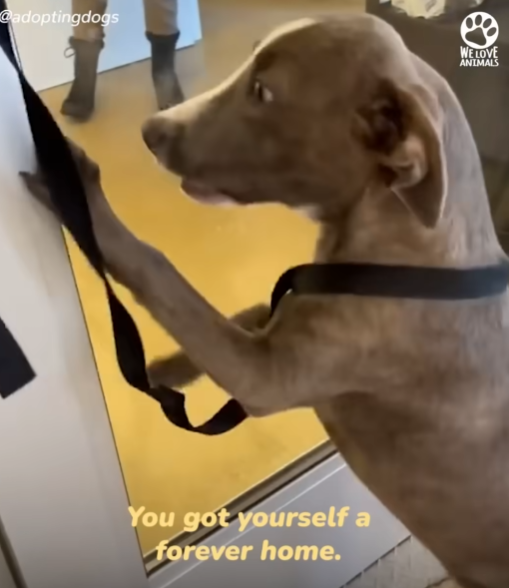
Shelter staff often say that adoption is their favorite part of the job—but also the most emotional.
Because every goodbye is also a beginning.
They watch as dogs leave behind the only place they’ve known for weeks, months, sometimes years. They watch as those same dogs step into something new, something uncertain—but full of possibility.
And the reactions?
They’re never just about the moment itself.
They’re about everything that came before.
The loneliness.
The waiting.
The silent hope that someone, somewhere, would choose them.
So when that moment finally comes—when the leash is clipped on, when the door opens, when they step outside into the sunlight—it’s more than just leaving a shelter.
It’s stepping into a new life.
Some run forward without looking back.
Some pause, as if trying to understand.
Some tremble.
Some leap.
Some cry.
Some simply lean into the person who chose them, as if to say, Thank you for seeing me.
But no matter how they react, one thing is always the same.
In that moment, they are no longer just shelter dogs.
They are someone’s dog.
Someone’s companion.
Someone’s family.
And that changes everything.